
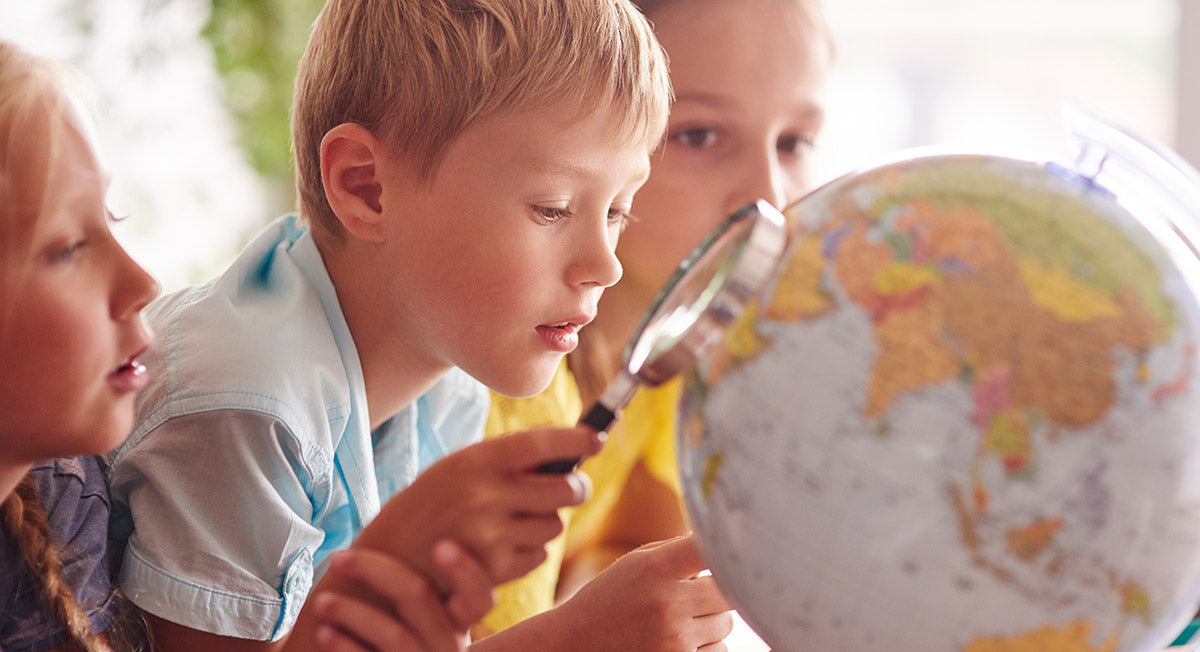
The world is vast and full of mysteries and incredible places to explore. Teaching children the basics of maps, compasses, and coordinates can be a real adventure, allowing them to develop orientation, location, and space-building skills.
In this article, we will explore ways to make teaching geographic orientation fun and exciting, with suggestions for activities involving globes, maps, and compasses.
Teaching Geographic Orientation
Understanding concepts of geographic orientation helps children develop a sense of direction, perceive the importance of cardinal points, and situate themselves in relation to space. Learning about maps and geographic coordinates also stimulates logical and spatial reasoning, essential elements for understanding the world they live in.
Furthermore, these skills spark curiosity and allow children to imagine traveling to distant places, learning about the geographical and cultural diversity of our planet.
Geographic Exploration Activities with Maps, Globes, and Compasses
Here are some creative and practical activities to introduce basic concepts of geographic orientation in a fun and interactive way.
1. Discover the cardinal directions using a compass.
For children to understand the concepts of North, South, East , and West, it's essential to start with a simple activity using a compass .
How to do it:
Another suggestion : Create a simple "treasure hunt" game where each clue leads each child to a specific location following a cardinal direction, such as " take three steps north " or " take two steps west " until they find a small hidden treasure.
2. Exploring the globe
Globes are incredible tools for teaching concepts of latitude, longitude, and geographic location.
How to do it:
Additional activity: Give small missions, such as " find the northernmost country in South America " or " locate a place that has snow all year round ." This type of activity stimulates curiosity and research skills.
3. Create r neighborhood maps
A great way to understand maps is to create one! Do a hands-on exercise where the children draw a map of the... street where they live or the schoolyard .
How to do it:
4. Present the geographic coordinates using a "latitude and longitude" game.
Learning about coordinates can be fun using a globe and a discovery game.
How to do it:
5. Create a "Travel Itinerary" in a planisphere
Help children imagine a trip around the world using a large world map or even a printed map.
How to do it:
Tip: Children can make small cards with information about each place visited, creating a "travel collection" that they can share with the class.
The importance of transforming learning on an adventure
Practical activities like these not only help Not only does it reinforce the content, but it also awakens in children a passion for exploring the world and understanding the space around them . By introducing maps, compasses , and globes, teachers and parents turn learning geographic orientation into a true adventure, encouraging children's imagination and natural curiosity.
These activities teach more than just the basics of direction; they help children develop skills that will be useful throughout their lives, such as the ability to orient themselves, think logically, and plan routes .
May this introduction to the world of geography be the first of many adventures for young explorers!