
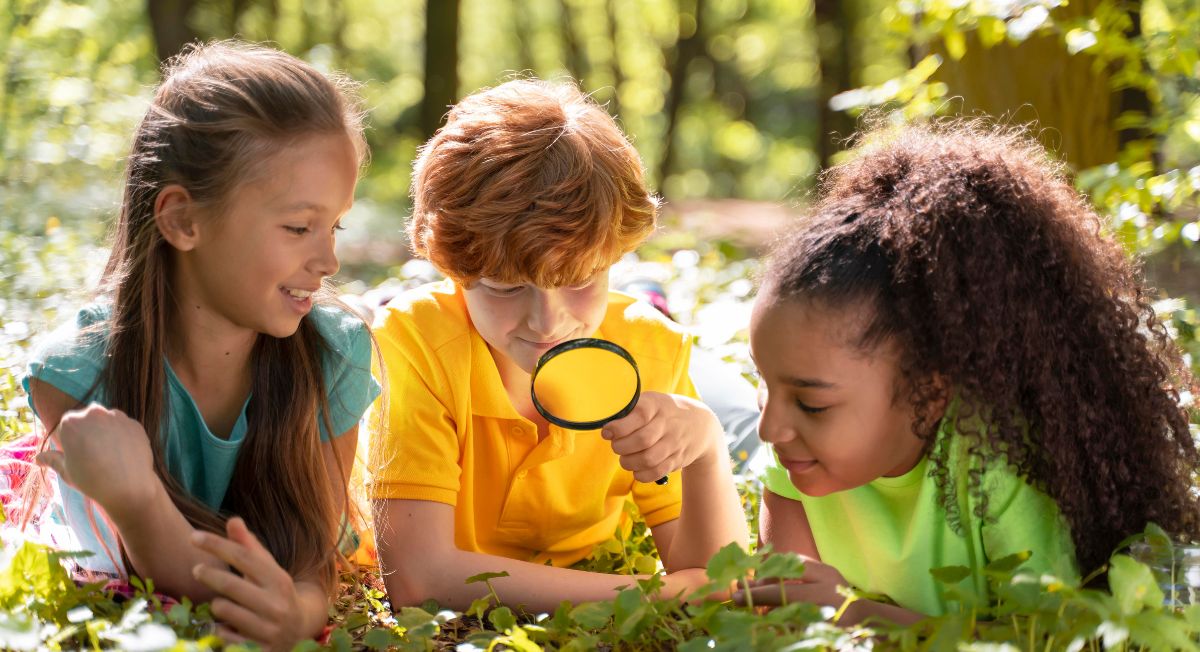
Summer vacation is a perfect time to engage children in educational and fun activities. Insect watching is an excellent option, which not only sparks children's natural curiosity but also promotes important research, investigation, and ecological awareness skills. This article explores how this activity can be conducted in an exciting and educational way.
Encourage research on the characteristics of insects.
Before heading out into the field, it's important for children to familiarize themselves with the different types of insects they might encounter. In this regard, encourage them to:
-Use books and encyclopedias: Provide entomology books adapted to the children's age. Illustrated books are particularly useful for helping to identify and learn about different insect species.
-Search the internet: Use reliable online resources, such as natural history museum and university websites, to obtain detailed information about the habits, habitats, and characteristics of insects.
-Create notebooks: Encourage children to take notes on the insects they researched, including drawings and descriptions. This note-taking process helps consolidate the knowledge acquired.
Observing insects in their natural habitat.
Direct observation is fundamental to truly understanding insect life. To achieve this, one can organize:
- Outings to parks and gardens: Take children to parks, botanical gardens, or even your own backyard. Explain the importance of observing insects without disturbing their natural habitats.
-Exploring different environments: Encourage visits to diverse environments, such as wooded areas, open fields, and stream banks, to find a wider variety of insects.
To promote meaningful interactions and encourage research.
To transform insect observation into a truly educational activity, it is important to promote meaningful interactions and encourage investigation:
- Hypothesis generation: Encourage children to formulate questions and hypotheses about the behavior and ecology of the insects they observe. For example, "Why do ants follow in a line?" or "What is the favorite food of butterflies?"
-Discussion and reflection: After the observation sessions, organize group discussions where the children can share their observations and hypotheses. This exchange of ideas is vital for the development of critical and scientific thinking.
Developing Ecological Respect
Understanding the importance of insects in the ecosystem is essential for promoting lasting ecological respect.
-Ecological functions of insects: Explain to the children the various ecological functions of insects, such as pollination, decomposition of organic matter, and biological pest control.
-Conservation and preservation: Discuss the importance of conserving insect habitats and the impact of human activities on the lives of these small creatures. Promote practices such as avoiding the use of pesticides and creating insect-friendly gardens.
Tools and Equipment for Observation
To make insect watching more effective and exciting, it is helpful to use appropriate tools:
Insect viewers: Devices that allow you to observe insects up close without harming them are excellent for research.
-Observation containers: Small containers with perforated lids allow for the temporary observation of insects before returning them to their natural habitat.
-Capture nets: Appropriate nets help to safely capture insects for observation.
-Magnifying glasses: Handheld magnifying glasses are essential for observing minute details of insects, such as the structure of their wings and antennae.
-Observation Display Cases: Small display cases allow for clear and detailed viewing, promoting deeper and more prolonged study.
Conclusion
Observing insects during summer vacation is an activity that combines fun with learning, promoting research, investigation, and ecological awareness in children. With the use of appropriate tools and the promotion of meaningful interactions, this activity can become an enriching and unforgettable experience. By encouraging children to explore and understand the world of insects, we are preparing the next generation to appreciate and protect the biodiversity of our planet.
Check out all our articles here .
Follow all our news here .