
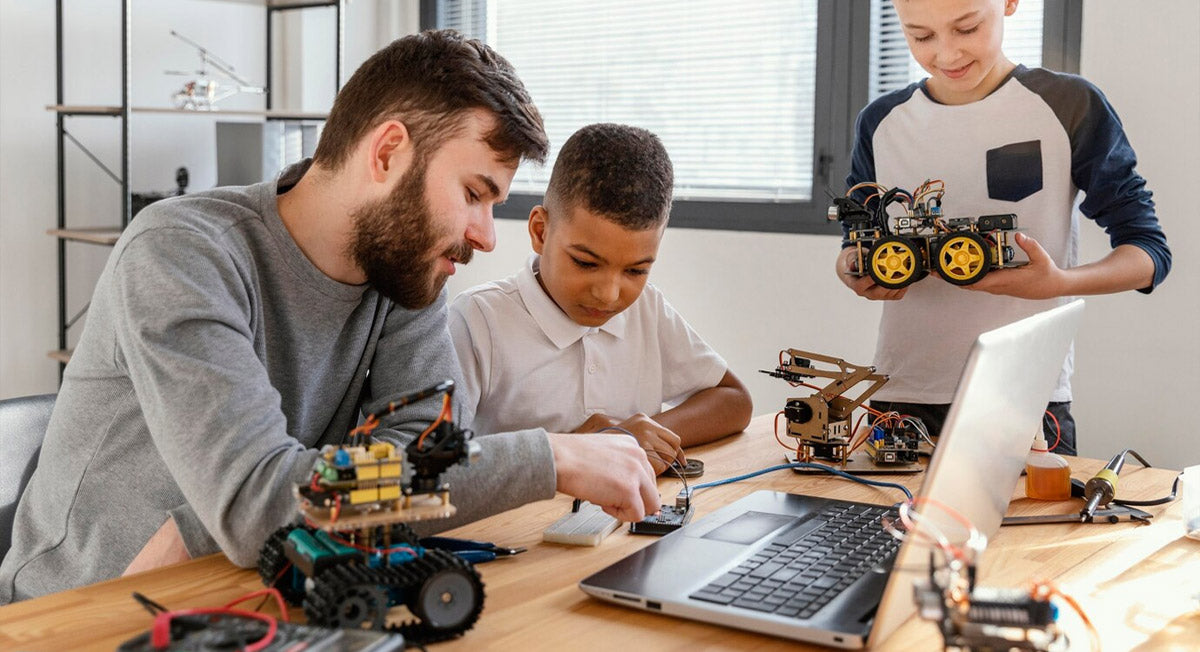
Have you heard of STEAM Education? If not, it's time to discover how this innovative approach can revolutionize the way we teach and learn in classrooms. Get ready to dive into a universe full of Science, Technology, Engineering, Arts, and Mathematics – all while enhancing essential skills. Let's explore the fascinating world of STEAM Education together and learn how to implement it effectively!
What is STEAM Education?
STEAM education is much more than a simple sum of subjects. It represents an innovative educational approach that integrates Science, Technology, Engineering, Arts, and Mathematics in an interdisciplinary and practical context. This pedagogical model seeks to stimulate creativity, critical thinking, and the resolution of complex problems through experience and collaboration.
By uniting different areas of knowledge, STEAM education allows students to explore connections between theoretical concepts and their real-world applications. In this way, they develop fundamental skills to face challenges, such as teamwork, adaptability, and innovative thinking.
Through STEAM education, students are encouraged to question, investigate, and create solutions to real-world problems, becoming active agents in constructing their own learning. This dynamic and integrated approach promotes student autonomy while preparing them to operate in an increasingly technological and globalized society.
Benefits of Implementing STEAM Education
Implementing STEAM education brings a number of significant benefits to students. By integrating Science, Technology, Engineering, Arts, and Mathematics into the school curriculum, students develop essential skills.
One of the advantages is the promotion of critical thinking and the ability to solve complex problems. Students are encouraged to think creatively and innovatively when faced with interdisciplinary challenges.
Furthermore, STEAM education encourages collaboration among students, preparing them to work in teams and communicate their ideas effectively. This multidisciplinary approach also helps to spark students' interest in areas previously considered difficult or unattractive.
By combining theory and practice, students are able to visualize how disciplines relate to the real world, making learning more meaningful and relevant to their future. The successful implementation of STEAM education can positively impact not only students' academic performance but also their ability to meet the challenges of the modern job market.
Challenges and Strategies for Effective Implementation
Implementing STEAM education in the classroom can be challenging, but the benefits far outweigh the difficulties. By adopting an interdisciplinary approach that spans various subjects, students are able to develop essential skills for the future. With effective strategies and the necessary support, it's possible to transform how we teach and learn. STEAM education opens doors to greater creativity and innovation, and prepares students to face challenges with confidence. Try implementing STEAM practices in the classroom and discover the full transformative potential of this modern educational approach!
Conclusion
STEAM education represents a revolution in teaching, integrating Science, Technology, Engineering, Arts, and Mathematics in a practical and interdisciplinary way. This approach not only enriches learning but also prepares students for challenges, developing skills such as critical thinking, creativity, collaboration, and complex problem-solving.
By implementing STEAM education, teachers can transform classrooms into dynamic spaces for research and innovation, where students are encouraged to explore and apply knowledge in meaningful ways. Despite the challenges in implementation, effective strategies and adequate support can overcome these difficulties, providing a more engaging and relevant education.
Therefore, embracing STEAM education is investing in the future. By equipping students with the tools and skills necessary for a constantly changing world, we are preparing a generation capable of innovating, adapting, and progressing. Try integrating STEAM practices in the classroom and witness the positive impact of this methodology on the academic and personal development of your students. The education of the future starts now, and STEAM is the path to get there.
Check out all our articles here .
Follow all our news here .