
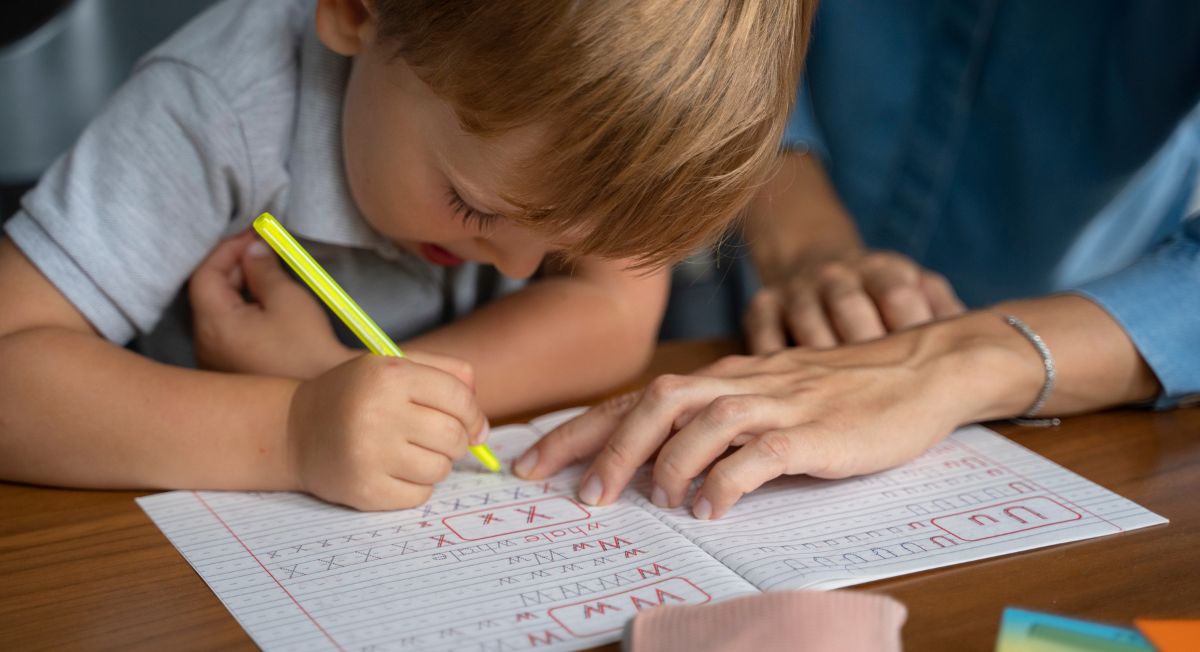
The pre-reading and pre-writing phase is a crucial period in a child's literacy development. During this stage, young children are beginning to familiarize themselves with letters, sounds, rhymes, and patterns that form the basis of reading and writing. An effective way to prepare them for this exciting adventure is through fun games and activities that stimulate their pre-reading and pre-writing skills. Furthermore, the involvement of parents and educators plays a fundamental role in this process, providing support, encouragement, and learning opportunities.
Games and playful activities to develop pre-reading and pre-writing skills:
Letter and Number Hunt: Hide cards or blocks with letters and numbers around the room and invite the children to find and identify the letters and numbers. This activity helps not only in familiarizing themselves with letters, but also in numerical recognition.
Letter and word memory game: Create pairs of cards with simple letters or words and turn them face down. Children must turn over two cards at a time, trying to find the matching pairs. This game helps develop visual letter and word recognition.
Word and phrase building: Use magnetic letters or letter-shaped building blocks so children can form simple words and phrases. Start with short, familiar words and phrases like "dog," "sun," or "the cat meows," and then move on to more complex structures.
Drawing and storytelling: Encourage children to draw and tell their own stories, whether through illustrations or writing. This stimulates creativity and helps develop written expression.
Games involving letter and object association: Create games where children must associate letters with objects that begin with the same sound, such as associating the letter "B" with "ball" and "banana." This strengthens phonemic awareness.
The role of parents and educators in promoting literacy.
Parents and educators play a crucial role in the development of children's pre-reading and pre-writing skills. Here are some ways to contribute to this process:
Sharing reading and writing practices: Regularly set aside time to read and write together with children, encouraging their participation and discussion about the stories and texts.
Creative and illustrative writing activities: Offer children opportunities to express their ideas through writing and illustration, whether by creating stories, drawing, or writing letters and notes.
Stimulating conversations: Maintain meaningful conversations with children by asking open-ended questions and encouraging them to share their opinions and experiences through written and oral language.
Promoting literary behaviors: Demonstrate enthusiasm for reading and writing, showing children how these skills are valuable and relevant in their daily lives.
By incorporating these pre-reading and pre-writing activities and actively involving parents and educators, we can prepare children to become confident and proficient readers and writers, establishing a solid foundation for their academic success and adult lives.
Check out all our articles here .
Follow all our news here .