
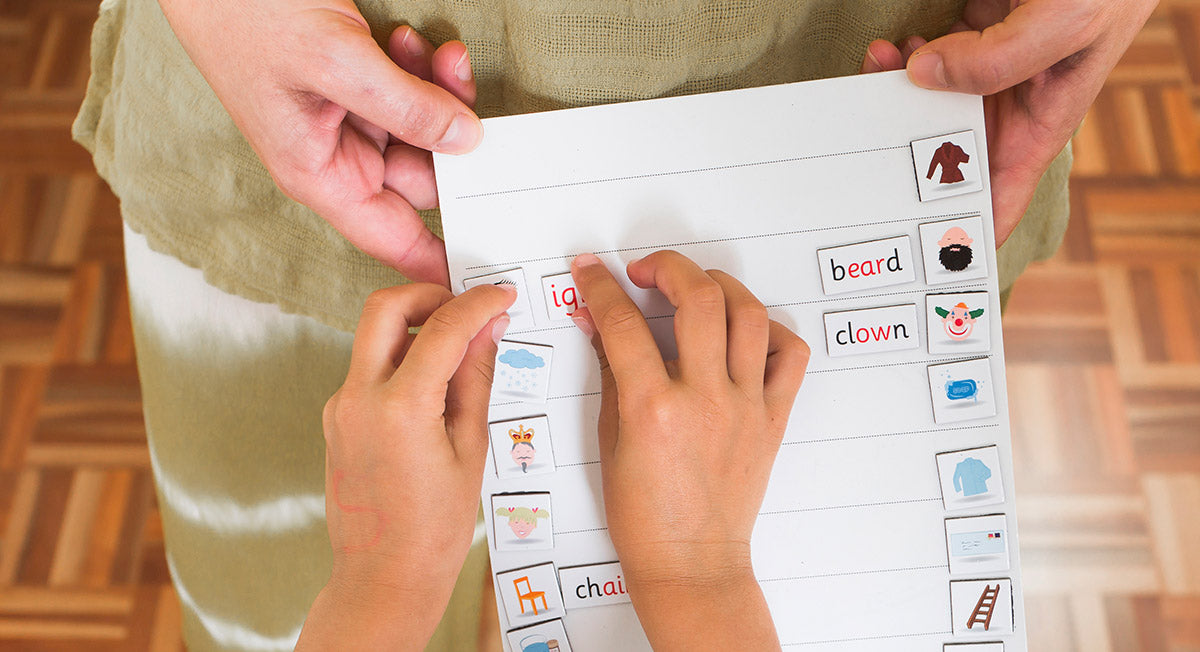
For children with difficulties in verbal or written expression, storytelling can seem like a challenge, especially when they lack vocabulary or a well-organized thought structure. However, visual aids such as pictograms can be powerful allies in overcoming this barrier, helping children structure sentences, organize thoughts, and express themselves creatively.
In this article, we will explore how pictograms can be introduced in a practical and fun way to help children construct sentences and narratives, thus developing their language and expression.
What are pictograms and why are they useful?
Pictograms are simple images that visually represent words, objects, actions, or concepts. Unlike letters and words, which require a more advanced level of literacy, pictograms offer a means of communication accessible to any child, regardless of their reading or writing ability.
Using pictograms as a sentence-building tool allows children to organize their thoughts, create narratives, and express ideas in a logical and visual way. With pictograms , the process of organizing stories and constructing sentences becomes more intuitive, especially for those who are still developing verbal language.
How to incorporate pictograms into sentence and narrative construction.
Introducing pictograms into daily activities can be a simple and effective way to stimulate expression and organization of thought. Below are some strategies for using pictograms in constructing sentences and stories:
1. Start with simple sentences.
Begin by introducing pictograms to create short sentences. Use cards with pictograms to represent actions, objects, and people. For example, to form a sentence like "The boy eats an apple," use a pictogram of a boy, one of an action (like eating), and another of an apple. This exercise helps the child understand the structure of a sentence (subject-verb-object).

Suggested activity: Create simple sentences using three pictograms and ask the child to point to and read the sentence aloud, gradually building more complex sentences with new pictograms.
2. Telling stories in sequence
To develop narrative skills, pictograms can be arranged sequentially. This allows the child to begin to understand the beginning, middle, and end of a story. Arrange pictograms that represent different parts of a narrative and help the child order them, like a story with a character , an event, and a conclusion.
Suggested activity: Give the child a series of pictograms and encourage them to arrange the images to create a story. You could ask them, for example, to create a narrative about a pet that participates in a story. On an adventure to a park.
3. Create storybooks with pictograms.
A fun way to learn is to create small storybooks using pictograms. Each page can represent a scene or event from the story, with pictograms that the child chooses and arranges to make sense of the plot. These " books" can be revisited to build memory and a love for storytelling .
Suggested activity: Provide children with colored paper and different pictograms so they can create a storybook. Then, they can "read" the story to the class or family, thus reinforcing the development of verbal expression.
4. Use of pictograms to express emotions and actions.
Pictograms are also effective for conveying emotions and actions, especially for children who have difficulty expressing feelings. Having pictograms with visible expressions or actions helps children associate the images with their own feelings and experiences.
Suggested activity: Present pictograms of emotions (such as joy, sadness, anger ) and actions (such as hugging, smiling, running). Create short stories in which children can use these images to show how the characters in the story feel in different situations.

Benefits of using pictograms for language development
Pictograms offer a variety of benefits for language development, including:
Learning to tell stories with pictograms is a creative and practical approach to help children develop their language and expression. This technique promotes not only communication, but also the organization of thought and autonomy. By exploring activities with pictograms, children can playfully assemble sentences, structure stories, and develop an increasingly complete sense of communication.
This practice, when applied consistently , can make a significant difference in children's linguistic and social development, helping them to express themselves better and to realize that communicating their ideas is an enriching experience full of possibilities.