
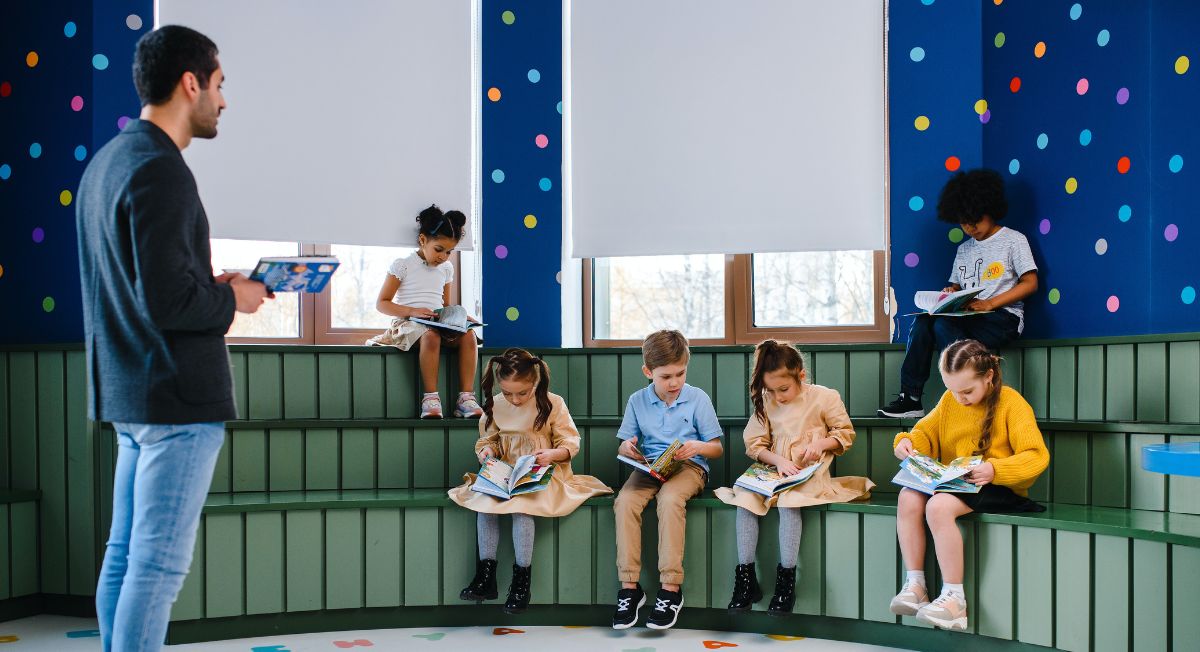
Communication plays a fundamental role in a child's life. It is through communication that they interact, express their needs, and share experiences. The ability to communicate effectively is an essential skill that influences a child's social, emotional, and cognitive development.
In this article, we will explore the importance of communication in children's lives and understand how we can promote an environment conducive to their development.
Communication development in children
From birth, a child needs to communicate, as they are born completely dependent on others. From a very early age, a child begins to make sounds and, later, to communicate through the use of words.
After the age of 2, children begin to construct simple sentences and express their needs and emotions more fully and clearly.
Furthermore, throughout their development, children also become better listeners and empathetic, improving their social skills.
The importance of communication in school for children.
School is an essential social and cultural space for any child. Through interaction within the school context, children improve their communication skills daily, learning to interact with one another, whether through emotions, words, or actions.
Thus, through socialization at school, children learn to build friendships, becoming more understanding and sensitive towards their peers.
Above all, it is essential that educators encourage and promote effective communication, creating an environment conducive to student growth and success.
How can we promote a healthy communication environment?
Listen actively: Take the time to listen attentively to children, showing genuine interest in their stories and thoughts. This encourages confidence and openness in communication.
Encourage expression and emotions: Encourage children to express their thoughts and feelings by providing a safe and judgment-free environment. Value their opinions and ideas, regardless of whether they agree or disagree. You can use educational materials to make the environment more fun and conducive to the development of these thoughts and emotions in children, through, for example, emotion games , such as puppets, balls, and emotion dice.
Positive communication model: Be a role model for effective communication, using clear and respectful language. Demonstrate how to resolve conflicts constructively and encourage children to do the same.
Promote interaction: Provide opportunities for children to engage in conversations, discussions, and activities that encourage communication and collaboration with others.
Read together: Shared reading is a great way to promote communication and language development. Read books with children, encourage them to ask questions, and discuss the content.
Conclusion
Communication plays an essential role in children's development, affecting their social and emotional growth. By developing effective communication skills, children have a solid foundation for future success in various areas of life.
By fostering a healthy communication environment, we can help children become confident, expressive individuals who are connected to the world around them.
Follow all our news here .