
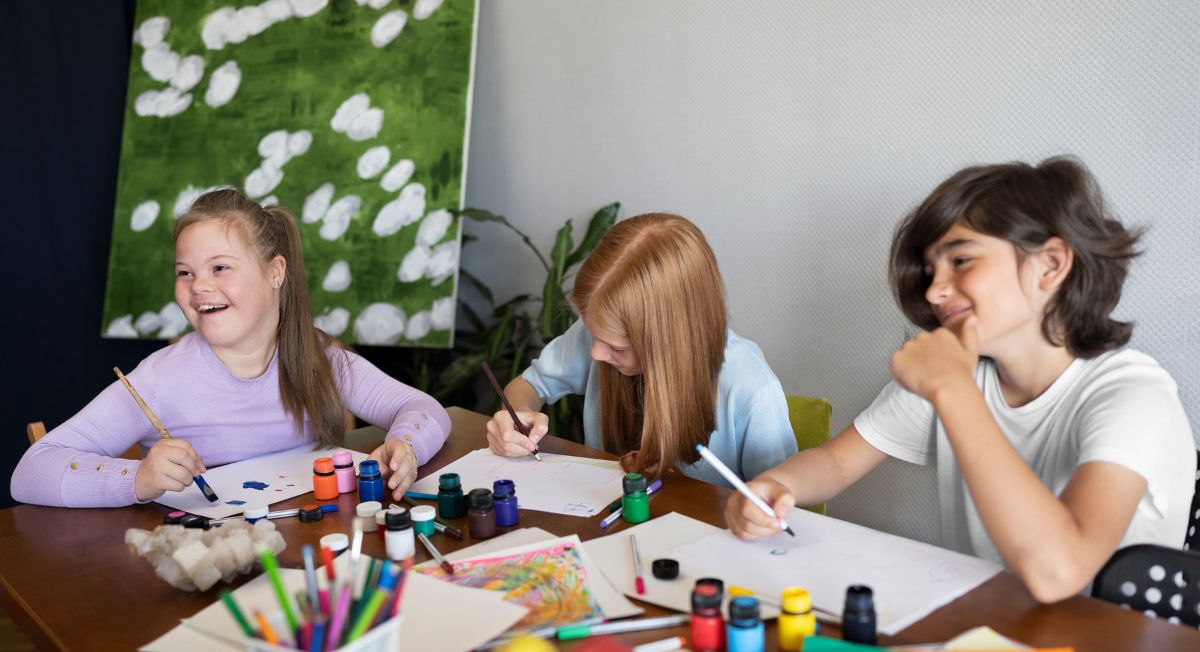
Art plays a fundamental role in children's development, going far beyond creativity and entertainment. Art has the power to promote inclusion and cultural diversity, helping children understand, value, and celebrate the differences that make the world richer and more interesting.
In this article, we will seek to understand how art can serve as a powerful tool to nurture a generation of more open, inclusive, and culturally conscious minds.
To awaken cultural curiosity.
Art is a universal language that transcends linguistic and cultural barriers. By exposing children to a variety of artistic expressions from different cultures, we are embarking on a journey of cultural discovery. Dance, music, painting, and literature from different parts of the world offer a unique opportunity for children to explore traditions.
To foster empathy and understanding.
Through art, children can put themselves in other people's shoes in order to understand their points of view, emotions, and experiences. For example, by reading a book that narrates the life of a child in a distant country, children can develop empathy and understanding of realities different from their own. This empathy is a crucial step towards inclusion and acceptance of differences.
Celebrating the diversity of talents
Every child has unique talents and abilities, and art offers a space where those talents can flourish and be appreciated. By celebrating the diversity of talents in art, we are sending a clear message that all forms of expression are valuable and worthy of recognition.
To promote intercultural collaboration.
Artistic collaboration among children from different cultural backgrounds is an effective way to promote inclusion and diversity. By working together on artistic projects, children learn to value each other's unique contributions and to work in harmony, regardless of their cultural differences.
Encourage self-expression
Art allows children to express themselves in unique and personal ways. Encouraging self-expression is a way to validate children's individual voices, regardless of their cultural background. Through art, children can tell their own stories and share their perspectives on the world.
To value history and cultural tradition.
Art is also a way to preserve and value history and cultural tradition. By exploring the traditional arts of different cultures, children learn about the values, rituals, and customs that have shaped these societies over time.
Conclusion
Art plays a fundamental role in promoting inclusion and cultural diversity in children. It opens doors to cultural curiosity, empathy, intercultural collaboration, and self-expression. By celebrating the diverse forms of artistic expression and the cultural histories that accompany them, we are building a future where children value and respect differences.
Check out all our articles here .
Follow all our news here .