
Developing creativity in early childhood education.
From a very young age, children demonstrate a natural curiosity about the world around them. Therefore, this first stage of education is crucial for developing skills such as creativity and imagination. In this sense, it is essential to promote and foster the creative potential of each child from early childhood education.
How to stimulate creativity
Children are naturally creative. However, it is essential that adults encourage and nurture this creativity, providing a wide range of rich and meaningful experiences, but also offering a safe, encouraging environment conducive to the development of creative skills.
Art, for example, provides the ideal environment for creativity to be effectively cultivated and enhanced. In other words, art is an extraordinary form of expression capable of providing moments of enjoyment and, at the same time, exploration of creativity.
The role of adults in the development of creativity.
However, valuing art as a tool for developing children's creativity and imagination also requires the involvement of parents and educators/teachers. They play a fundamental role in encouraging and supporting children in their artistic expressions, providing suitable spaces for practicing different artistic modalities and valuing their productions.
Art, a key tool for developing creativity.
Creativity and imagination are fundamental skills for children's development. And art plays a crucial role in stimulating these skills.
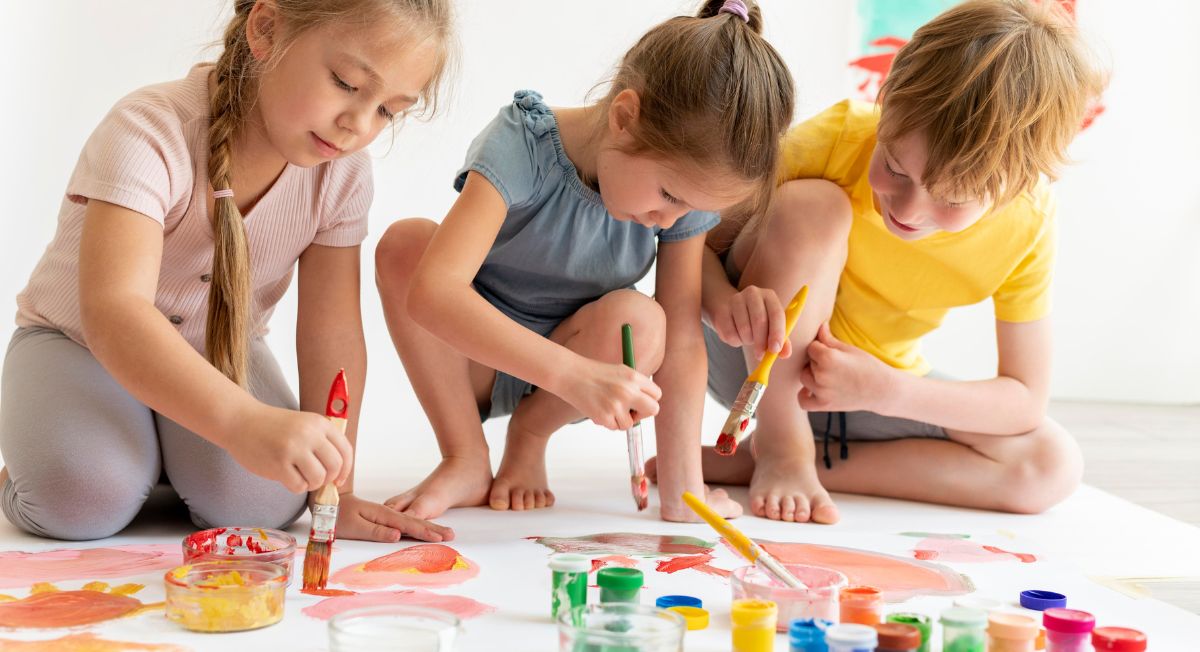
For children, art is an inexhaustible source of fun. Painting, drawing, molding clay, or cutting paper are some of the activities that stimulate their curiosity and creativity. Through art, they can create fantastic worlds, bring imaginary characters to life, explore colors and textures, and express emotions.
Discover 4 types of art for children in early childhood education.
There are different types of art that children can discover and experiment with; let's look at some examples:
- - Painting: Painting is an art form in which children can explore different materials and textures and have the opportunity to express their emotions and create visual representations.
- - Theatre: Theatre is another art form that plays an important role in the development of children's creativity and imagination. Through the representation of fictional characters and situations, children have the opportunity to explore different roles, experience different emotions, and construct narratives. Theatre stimulates improvisation skills, group collaboration, and the development of empathy, essential skills for the formation of creative and imaginative individuals.
- - Music and dance: Music and dance allow children to express themselves non-verbally, stimulating imagination and creativity. By listening to different rhythms and melodies, they can create movements and gestures that translate their emotions and thoughts. Furthermore, music and dance promote the development of motor coordination and body awareness, contributing to healthy and balanced growth.
Art, an environment of free, stimulating and inclusive expression.
In short, the arts play a crucial role in the development of creativity.
By providing a free, stimulating, and inclusive environment for expression, children have the opportunity to explore their creative resources.
Investing in art as part of the educational process is investing in the holistic development of children, preparing them to face the challenges of the future with originality and the capacity for innovation.
Consult here all of our items.
Follow all our news here .