
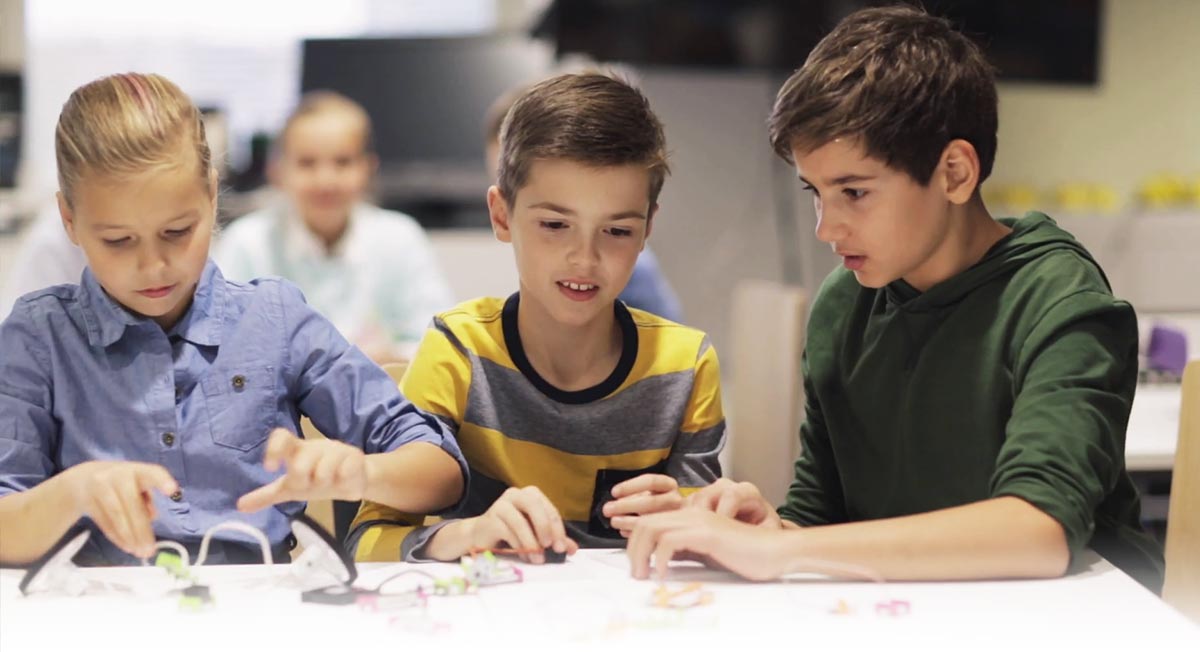
In recent years, robotics has become an increasingly present tool in classrooms, bringing a range of benefits and opportunities for students and teachers. As technology advances, the applications of robotics in the daily life of schools have expanded, enriching the learning process and preparing students for the challenges of the 21st century.
To stimulate creativity and critical thinking.
One of the main applications of robotics in daily school life is to stimulate students' creativity and critical thinking. Through building and programming robots, students are challenged to solve complex problems, think logically, and explore innovative solutions to real-world challenges. This hands-on and engaging approach not only makes learning more meaningful but also prepares students to face future challenges with confidence and resilience.
To promote collaboration and teamwork.
Another important application of robotics in schools is to promote collaboration and teamwork among students. By working together to build and program robots, students learn to communicate ideas, share, resolve conflicts, and achieve common goals. These skills are essential not only in the classroom but also in everyday life and the job market, where collaboration is fundamental to success.
Developing 21st-century skills
Robotics in schools is not just about learning about technology; it's also about developing essential 21st-century skills. Through robotics, students have the opportunity to develop skills such as critical thinking, problem-solving, creativity, communication, collaboration, and computational thinking. These skills are highly valued in today's job market and are fundamental to success in an increasingly technological world.
Preparing students for the future
As technology continues to advance, it is important that students are prepared to face the challenges of the future. Robotics in schools plays a crucial role in this preparation, providing students with the skills and knowledge necessary to thrive in an increasingly automated and technological society. By learning technology through robotics, students develop a deeper understanding of their potential to influence the world around them, empowering them to become active and informed citizens in a digital society.
Conclusion
Robotics is revolutionizing education, bringing a range of benefits and opportunities for students and teachers. By integrating robotics into the daily life of schools, students have the opportunity to develop essential 21st-century skills such as critical thinking, collaboration, and computational thinking, preparing them to face the challenges of the future with confidence and determination.
Check out all our articles here .
Follow all our news here .