
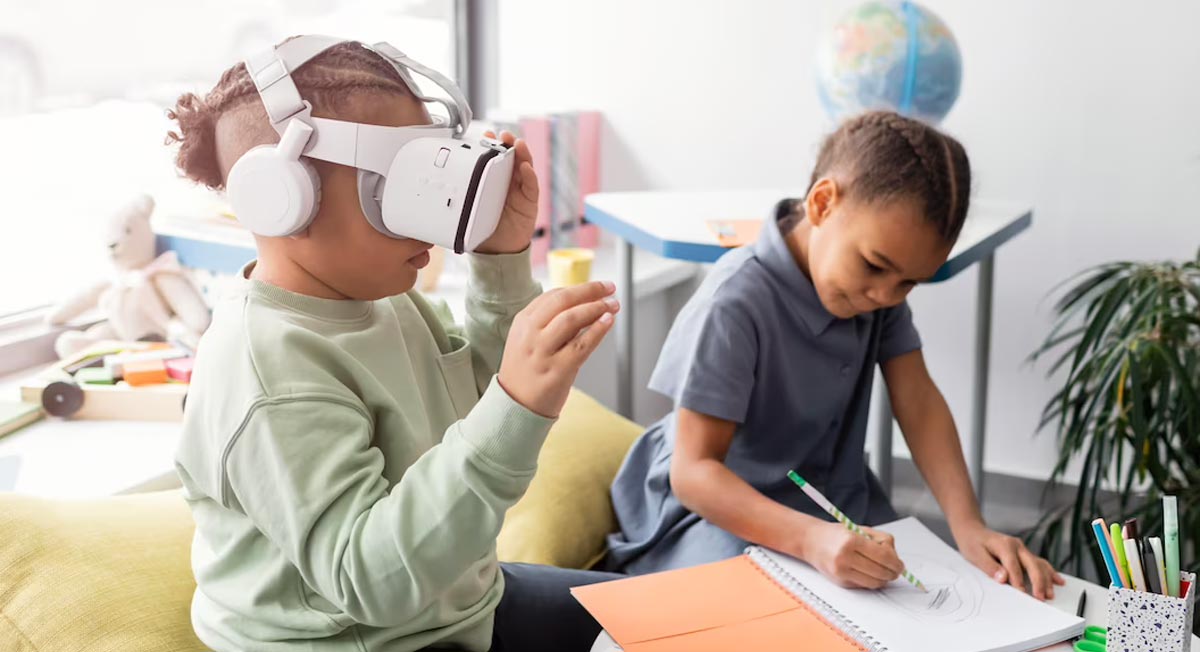
Education is a dynamic process that requires the use of diverse resources to foster a stimulating and engaging learning environment. In this context, teaching resources play a fundamental role by providing practical and interactive experiences that facilitate the teaching-learning process. Therefore, this article will explore the essential role of teaching resources in student engagement, highlighting their importance in promoting more meaningful and lasting learning.
To promote student engagement.
Visual and auditory stimulation
Educational resources offer a wide range of visual and auditory stimuli that help capture students' attention and spark their interest in learning. Interactive books, audiovisual resources, digital technologies, manipulatives, educational games, among others, are examples of resources that can create an attractive and motivating atmosphere in the classroom. This sensory stimulation increases students' ability to assimilate and retain information, making learning more effective.
Interactive and hands-on learning
Interactive teaching resources provide students with the opportunity to actively participate in the learning process. Furthermore, they allow them to manipulate objects, conduct experiments, solve problems, and explore concepts in a more practical way. In this way, by engaging students in concrete activities, teaching resources promote a deeper understanding of the content and stimulate critical thinking.
Variety and contextualization of content
Educational resources help diversify teaching, providing different perspectives and approaches that allow for a better understanding of the content. Through a wide variety of educational tools, students have the opportunity to explore diverse themes and develop a broader view of the subjects studied. This contextualized approach facilitates the connection between acquired knowledge and everyday situations, making learning more meaningful.
Student motivation and engagement
Thus, by introducing teaching resources in the classroom, teachers can spark students' interest and encourage them to become more actively involved in the learning process. Resources that bring relevance and practical applicability to the content, as well as challenges and problem-solving situations, stimulate students' curiosity and intrinsic motivation. In this way, they become more receptive to the proposed activities and more likely to invest time and effort in the pursuit of knowledge.
Check out all our articles here .
Follow all our news here .