
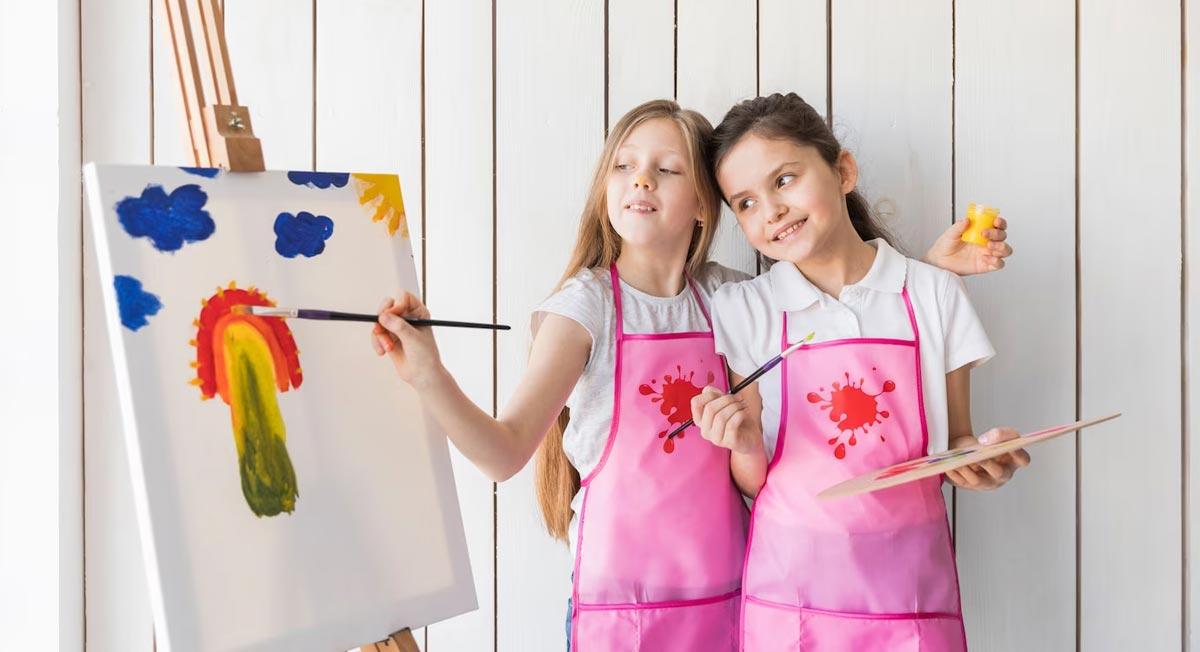
Children's education is a comprehensive and multifaceted process. Beyond traditional subjects like mathematics, science, and languages, it is essential to recognize the value of the arts in the educational process.
In this article, we explore the role of the arts in children's emotional expression and overall well-being, highlighting how music, painting, dance, and other forms of artistic expression play a vital role in children's emotional and psychological growth.
Art as a tool for emotional expression.
From an early age, children are flooded with a range of emotions and sensations that can be difficult to understand and communicate. Art, therefore, offers them a safe and effective way to express these more complex feelings. Through painting, drawing, or sculpture, children can convey emotions they cannot express verbally. In this way, art becomes a channel for nonverbal communication, allowing children to express joy, sadness, fear, and anger without the pressure of finding the right words.
To foster creativity and imagination.
Participation in artistic activities stimulates children's creativity and imagination.
In painting , children are encouraged to mix colors and experiment with various techniques, allowing them to develop their own forms of self-expression.
Through dance , children can create choreographies that reflect their worldviews.
Music , in turn, allows them to compose melodies that express their deepest emotions.
Strengthening self-esteem and confidence
Participating in artistic activities also has a positive impact on children's self-esteem. As they develop their artistic skills and receive recognition for their creations, their self-confidence grows. Similarly, praise and encouragement from parents, teachers, and peers strengthen feelings of accomplishment and belonging, which are fundamental to children's emotional well-being.
Art as a means of coping with stress and anxiety.
The modern world can be stressful for children.
Art can serve as an outlet to relieve stress and anxiety. Painting, drawing, or simply listening to music can calm the mind and provide a moment of tranquility. Thus, artistic practice acts as therapy, allowing children to process their emotions and free their minds.
Develop social skills.
In addition to fostering emotions, participating in artistic activities also promotes the development of social skills. Group dancing and music, for example, teach the importance of cooperation, active listening, and collaboration.
Conclusion
In short, the arts play a transformative role in children's education, providing a space for emotional expression, creativity, and personal growth. It is essential that educational institutions and parents value and encourage children's participation in artistic activities. By embracing this type of approach, schools and parents are helping to build a more conscious, emotionally intelligent generation, better prepared to face life's challenges in a healthier and more balanced way.
Through the arts, we are enabling children to find their voice and explore their inner world, thus cultivating their physical and emotional well-being.
Check out all our articles here .
Follow all our news here .