
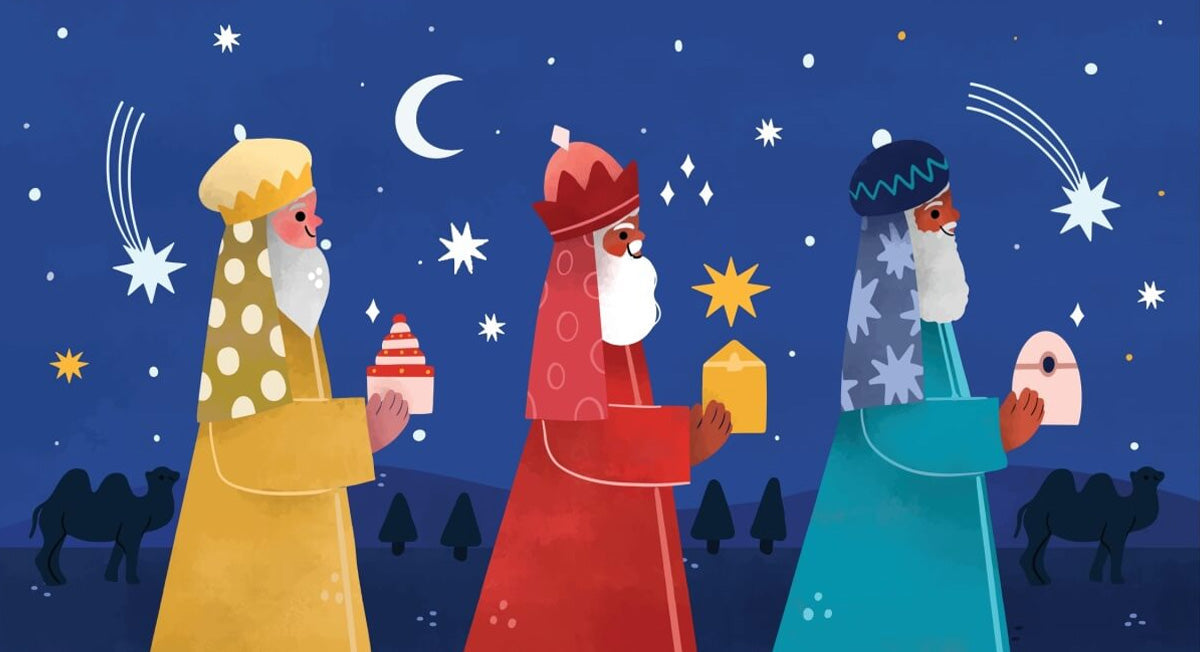
Epiphany, celebrated on January 6th, is a date full of symbolism, tradition, and history, with deep roots in Christian culture and popular celebrations. For educators and teachers , it is an excellent opportunity to teach children, both in Education. Preschool , as in the 1st Cycle , emphasizes the importance of this date through playful and educational activities.
Epiphany can be a starting point for exploring themes such as generosity, cultural diversity, the value of sharing, and respect for traditions.
In this article, we will explore some suggestions for creative and educational activities to engage children in the magical world of Epiphany.
1. The Dramatic Arrival of the Three Wise Men
Dramatizations are a great way to engage children in historical stories and lessons. For Epiphany, students could act out the visit of the Three Wise Men to the Baby Jesus.
Divided into groups, the children can create colorful costumes and accessories (such as crowns and improvised camels) to represent the Three Wise Men and their procession. During the reenactment, the children can learn about the Magi's expedition , the offerings they brought (gold, frankincense, and myrrh), and the meaning of these gifts.
Educational Objectives:
2. The Gift Game
Generosity is one of the central values of Epiphany. A fun and educational activity for the 1st Cycle could be the "Gift Game," where each child has to represent a Wise Man and offer a symbolic gift to a classmate. To make the activity more interesting, a "treasure hunt" dynamic can be created, where students must find the gifts (which can be pictures or objects) scattered around the classroom or schoolyard.
Educational Objectives:
3. Singing of the Kings and Musical Traditions
In many regions of Portugal, Epiphany is marked by the "Singing of the Kings," a tradition where groups of children sing in exchange for sweets or coins. For children in preschool and the first cycle of primary education , this can be an excellent opportunity to learn traditional Epiphany songs, exploring Portuguese musical culture. Furthermore, children can create their own songs or guess rhymes and verses related to the theme.
Educational Objectives:
4. Making the King Cake
King Cake is one of the greatest gastronomic traditions of Epiphany in Portugal. How about involving the children in making a King Cake (or a simplified version) in the classroom or school kitchen? Children can learn about the typical ingredients of the cake, their meaning, and even the symbolism of the bean and the trinket hidden inside. Furthermore, they can help decorate the cake, creating fun shapes and patterns.
Educational Objectives:
5. Memory Game: Symbols of the Wizards
To stimulate memory and recognition of symbols associated with Epiphany, a memory game can be created with cards representing the Three Wise Men and their gifts. Each card will have an image or drawing of the Wise Men, gold, frankincense, or myrrh, and the children will have to make matching pairs.
Educational Objectives:
6. The Art of Creating Crowns for Kings
One of the most emblematic images of Epiphany is the golden crowns of the Three Wise Men. For children in Education In preschool , an art activity like creating garlands can be a fun way to celebrate this date . Using materials such as gold paper, construction paper, colored pencils , and glitter, children can create their own crowns and learn about the symbolism of royalty and the importance of the Magi in history.
Educational Objectives:
Epiphany offers an excellent opportunity to explore not only a historical and religious date, but also the values of sharing , generosity, and respect for traditions. Through creative activities such as dramatizations, games, music, and arts, children can learn about the cultural and educational importance of this celebration. By integrating these practices into the school curriculum, educators and teachers help students better understand the meaning of Epiphany, while developing important skills such as teamwork, creativity, and empathy.
1 comment
Ana
Lindíssimas ideias. Grata!