
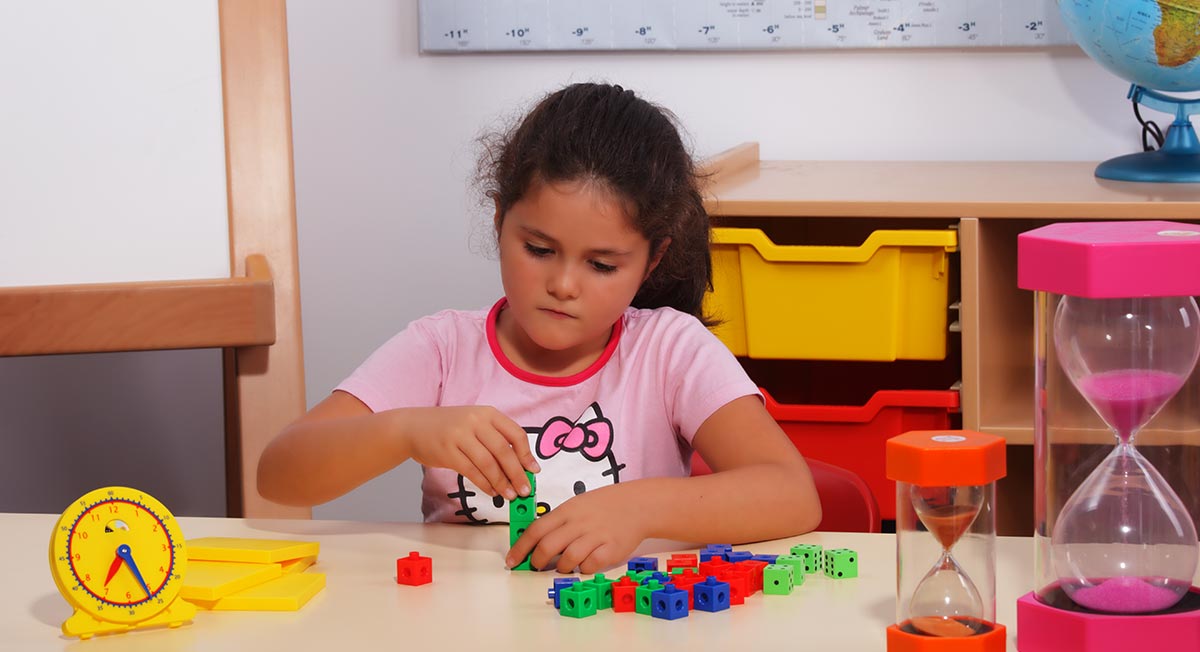
Mathematics is a fundamental discipline that permeates many aspects of our lives.
For children, understanding mathematical concepts from an early age not only develops their essential numerical skills but also fosters critical thinking, problem-solving, and creativity. However, making learning mathematics fun and engaging can be challenging. Fortunately, there are many educational resources available that can transform mathematics into an exciting and stimulating adventure for children.
Numbers and Operations:
Magnetic Numbers and Symbols: Magnetic numbers and symbols are a fun and interactive way to practice math operations. Children can manipulate numbers on a magnetic board to create simple equations and solve math problems.
Number cards or stamps: Cards or stamps with numbers are versatile resources that can be used in a variety of math activities, from matching games to counting and ordering exercises.
Abacuses: Abacuses are traditional and effective tools for teaching basic mathematical concepts such as addition, subtraction, multiplication, and division. Children can use abacuses to visually represent numbers and perform calculations in a tangible and interactive way.
Screening and Classification:
Sorting and Shape Games: Use games that involve sorting and geometric shapes, where children can classify objects according to different criteria such as color, shape, size, or type. This not only promotes sorting skills but also develops observation and classification skills.
Sorting box: A sorting box is an educational resource that allows children to classify objects according to specific criteria and organize them into designated compartments. This activity promotes sorting and organizational skills.
Exploring Fractions, Percentages, and Decimals:
Magnetic Percentage and Decimal Strips: Magnetic percentage and decimal strips are visual aids that help children understand and visualize concepts such as fractions, percentages, and decimals. They can be used to demonstrate equivalences between these concepts in a practical and tangible way.
Circular Fractions: Circular fractions are manipulative tools that represent fractions, percentages, and decimals in a visual and intuitive way. Children can manipulate the pieces to explore and compare different fractions and understand their relationship to decimal numbers and percentages.
Other Educational Resources:
Cuisenaire Rods: Cuisenaire rods are colorful manipulative tools that help children understand abstract mathematical concepts such as addition, subtraction, multiplication, and division. They can be used to model mathematical problems and explore numerical patterns and relationships.
Subtraction Chart: A subtraction chart is a visual aid that helps children visualize and solve subtraction problems systematically. They can use cards or markers to represent numbers and perform calculations concretely.
Numerical Balances: Numerical balances are manipulative tools that help children understand and explore concepts of equivalence and balance. They can be used to solve addition, subtraction, and multiplication problems in a practical and visual way.
Colorful Eggs for Counting: Colorful eggs for counting are manipulative resources that can be used to practice counting and pattern recognition skills. Children can sort the eggs by color, size, or pattern and perform counting and sorting activities.
In short, these are just a few examples of educational resources that can be used to make learning mathematics a fun and engaging experience for children. By exploring and experimenting with these resources, children can multiply their knowledge and build upon their learning, preparing themselves for a successful future in mathematics.
Check out all our articles here .
Follow all our news here .