
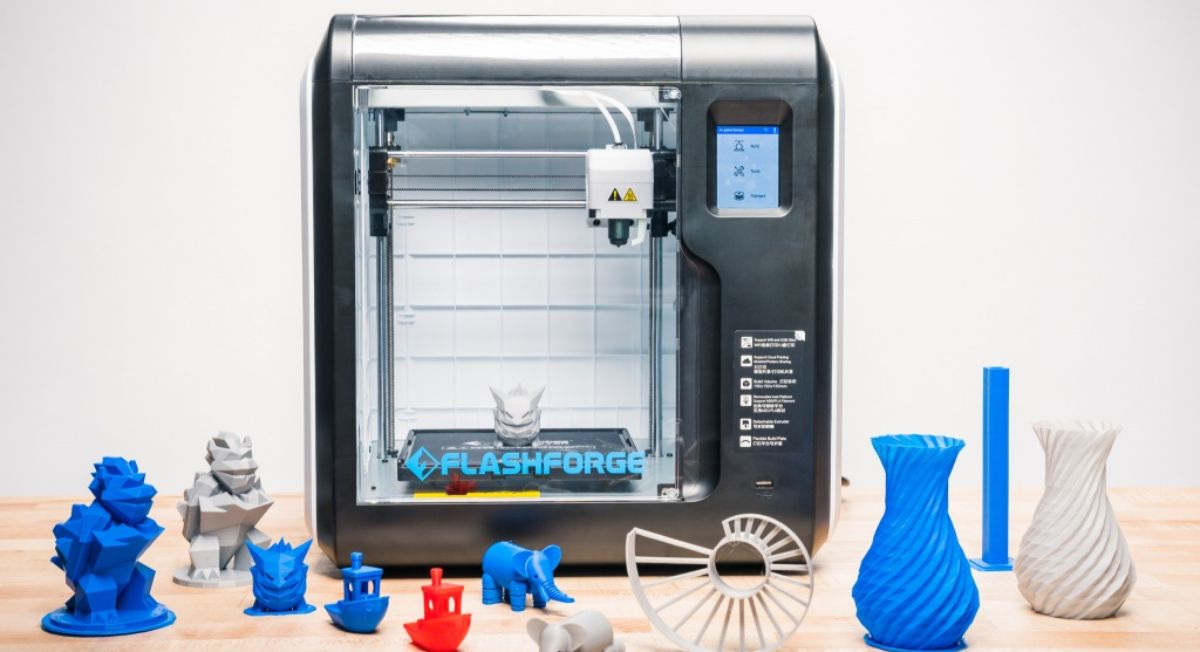
Technology is revolutionizing the way we learn and teach, and 3D printing has emerged as a powerful tool in the field of education. By allowing students to create physical objects from digital designs, 3D printing not only captivates their imagination but also enriches their learning experiences. In this article, we explore how 3D printing can be leveraged to create engaging educational activities, stimulating creativity, problem-solving, and critical thinking.
-
Exploring abstract concepts in 3D
One of the greatest advantages of 3D printing in education is the ability to transform abstract concepts into tangible objects. For example, when teaching geometry, students can create real geometric solids, which helps them visualize and better understand their properties. This not only makes learning more concrete but also promotes long-term knowledge retention.
-
Stimulating creativity and design.
3D printing offers students the opportunity to become creators, allowing them to design and personalize their own objects. This fosters creativity and innovative thinking as students experiment with new shapes, sizes, colors, and functionalities. Thus, through design projects, students can apply concepts studied in various disciplines, such as art, science, and mathematics.
-
Solving practical problems
Problem-solving is a vital skill that students should develop. 3D printing presents a unique opportunity to tackle real-world challenges. For example, students can be challenged to design and print solutions to everyday problems, such as a cell phone stand or a materials organizer. This hands-on approach encourages critical thinking and collaboration as students work together to find effective solutions.
-
Learning about technological processes
3D printing is a valuable introduction to technological processes and the digital world. Students can immerse themselves in the design and production cycle, understanding the steps from project conception to the creation of the final object. This opens doors to future careers in technology and engineering-related fields.
-
To promote interdisciplinarity.
Integrating 3D printing into education transcends individual disciplines. It facilitates collaboration between different school concepts, allowing students to explore connections between science, technology, engineering, art, and mathematics. This interdisciplinary approach reflects the real world, where solutions often require a holistic understanding.

Conclusion
In short, 3D printing is redefining education, making it more engaging and practical. By transforming abstract concepts into tangible objects, stimulating creativity, promoting problem-solving, teaching technological processes, and fostering interdisciplinarity, activities involving 3D printing empower students to become active learners prepared for the challenges of the 21st century. As educators continue to explore the possibilities of this technology, it is possible to witness a fundamental shift in how knowledge is acquired and applied.
Discover our entire 3D printing range here.
Check out all our articles here .
Follow all our news here .