
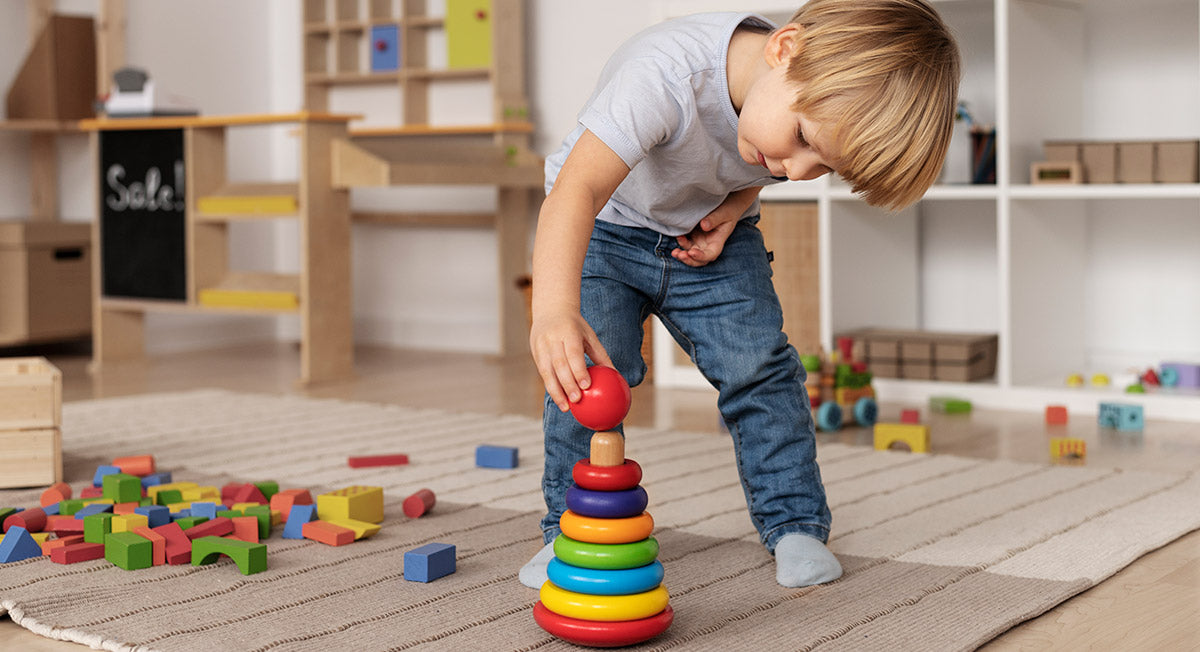
What is the Montessori Method?
The Montessori Method is an educational approach created by the Italian physician and educator Maria Montessori. It is based on the idea that children are naturally curious and have an innate desire to learn. The method emphasizes the development of children's independence, self-confidence, and autonomy by providing a prepared environment and appropriate educational materials.
One of the fundamental principles of the Montessori Method is the idea that each child is unique and has their own pace of development. Therefore, teaching is individually adapted, taking into account the needs and interests of each child. Furthermore, the method values freedom of choice and self-discipline, allowing children to engage in activities that spark their interest and help them develop important skills.
Principles and Philosophy of the Montessori Method
The Montessori Method is based on several principles and philosophies that guide its practice. One of these principles is the importance of the prepared environment. This means creating a physical environment that is orderly, clean, and aesthetically pleasing, with accessible educational materials organized logically. The prepared environment should be adapted to the needs and interests of the children, providing opportunities for them to explore and discover for themselves.
Another central principle of the Montessori Method is the role of the educator. The educator is not only a transmitter of knowledge, but also a facilitator and attentive observer of the children's development. The educator is there to provide guidance and support, but also to allow children to develop independence and self-confidence. The educator observes the children's needs and offers appropriate materials and activities to stimulate their growth and learning.
Benefits of the Montessori Method for Child Development
The Montessori Method offers a range of benefits for child development. One of the main benefits is the encouragement of independence and autonomy. Children who follow the Montessori Method learn to perform daily tasks on their own, such as dressing, eating, and putting away their belongings. This promotes self-confidence and self-esteem, as well as developing important practical life skills.
Furthermore, the Montessori Method emphasizes learning through action and hands-on experience. Children have the opportunity to manipulate objects and perform hands-on activities that stimulate the development of fine motor skills and coordination. These activities also help develop concentration, attention, and cognitive abilities.
Another important benefit of the Montessori Method is social and emotional development. The method encourages children to work together, share, and respect one another. This promotes empathy, cooperation, and communication skills. Children also learn to handle conflicts and resolve problems peacefully.
How to Implement the Montessori Method at Home
Implementing the Montessori Method at home may seem challenging, but it's possible with a few simple adaptations. First, it's important to create a prepared environment at home, with appropriate educational materials organized in an accessible way for children. It's also important to allow children freedom of choice and autonomy, letting them choose their activities and engage in practical daily tasks.
Parents also play a crucial role in implementing the Montessori Method at home. They should be present to offer guidance and support, but also allow children to be independent and make their own decisions. Parents can encourage children to develop practical skills, such as helping in the kitchen, tidying up the house, and caring for plants. Furthermore, it is important to create clear routines and boundaries to provide children with security and predictability.
The role of parents in the Montessori Method
In the Montessori Method, parents play an active role in the development and learning of their children. They are the first educators and have the responsibility of providing a suitable and stimulating environment for the children. Parents should be present and available to offer support and guidance, but they should also allow children to be independent and make their own decisions.
Parents also have a responsibility to observe the needs and interests of their children and to provide appropriate materials and activities to stimulate their growth and learning. They should be attentive to developmental signs and ensure that children have opportunities to explore and discover for themselves. Furthermore, parents should encourage autonomy and independence, allowing children to perform practical daily tasks and make age- and ability-appropriate decisions.
Montessori Activities to Stimulate Child Development
There are several Montessori activities that can be carried out to stimulate child development. One of them is the transfer activity, in which children transfer objects from one container to another using tweezers or spoons. This activity helps develop fine motor skills, coordination, and concentration.
Another activity is the matching game, in which children must find pairs of matching objects or cards. This activity helps develop memory, attention, and cognitive skills.
The Montessori Method in Schools: Advantages and Challenges
The Montessori Method can also be implemented in schools, offering a number of advantages for children's learning. One of the main advantages is the individualization of teaching, allowing each child to learn at their own pace and according to their interests. This helps to promote intrinsic motivation and a love of learning.
Furthermore, the Montessori Method values learning through action and hands-on experience, which can make classes more engaging and meaningful for children. The method also encourages collaboration and respect among students, creating a positive and welcoming learning environment.
However, implementing the Montessori Method in schools also presents challenges. One of the main challenges is the need for appropriate educational materials and a prepared environment. Furthermore, teachers need training and support to implement the method effectively. And finally, learning assessment must also be adapted to suit the method, valuing the process more than the results.
Montessori Resources and Materials for Children
There are many Montessori resources and materials available to help implement the method at home or at school. Some of the most common materials include so-called "sensory materials," which help develop the senses and fine motor skills. These materials include stacking boxes, color cylinders, towers, and more.
In addition to sensory materials, there are also specific materials for teaching mathematics, languages, science, and other areas of knowledge. These materials are designed to be manipulated by children, allowing them to explore concepts concretely before moving on to abstract concepts. Some examples of these materials include base-ten blocks, movable letters, and maps of continents.
Conclusion: The Importance of the Montessori Method in Children's Future
The Montessori Method is an educational approach that values the individuality, independence, and holistic development of children. It offers a range of benefits for child development, including promoting autonomy, encouraging hands-on learning, and fostering social and emotional development.
Implementing the Montessori Method at home or at school can be challenging, but the rewards are worth it. Parents play a key role in the method, providing a prepared and stimulating environment, as well as adequate support and guidance. In schools, teachers must be committed to the principles and philosophies of the method, providing an engaging and meaningful learning environment.
In the future, the Montessori Method can play an important role in shaping autonomous, responsible, and committed children. Therefore, it is crucial to value and invest in this innovative educational approach, which places children at the center of the learning process.