
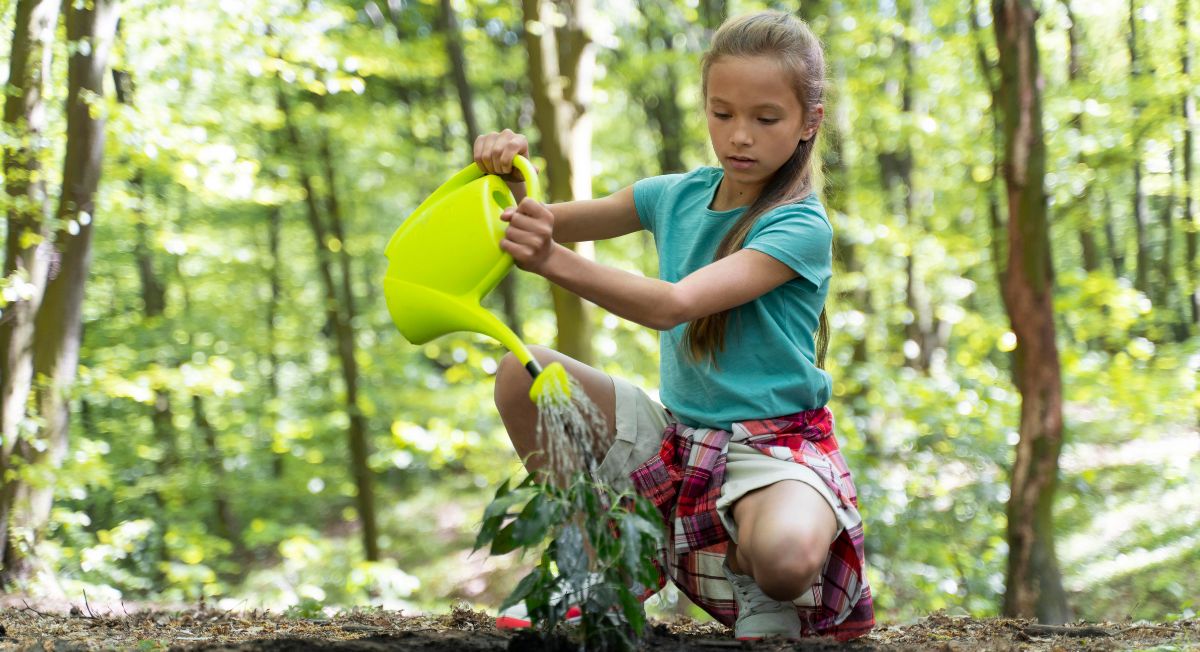
Preserving the future through environmental education.
We live in a world where preserving the environment and practicing sustainability are more important than ever.
Teaching children the principles of environmental preservation from an early age is essential to ensuring a greener and healthier future for the next generations.
Environmental education doesn't have to be boring. In fact, it can be exciting and engaging, especially when we build meaningful, playful educational activities.
The importance of environmental education in childhood.
Childhood is a crucial period for the formation of values and habits. By familiarizing children with the principles of environmental education and sustainability, we are shaping their perspectives on the world around them and encouraging them to become more responsible and conscious citizens.
Teaching children the importance of respecting nature and adopting more ecological practices from an early age is a valuable investment in the future of our planet.
3 Activities to promote environmental education
Activity 1: "Ecological Treasure Hunt"
A fun and interactive way to engage children in environmental education is through an "Ecological Treasure Hunt." Prepare a list of items related to nature and sustainability, such as leaves from different trees, stones, flowers, recyclable objects, and examples of renewable energy (like a miniature solar panel). Divide the children and adults into teams and give each team a list, along with a basket to collect the items.
As each team explores their surroundings in search of items on the list, they learn about the diversity of nature, the importance of selective waste collection, and the use of cleaner energy sources. At the end of the activity, bring everyone together to discuss the items collected and highlight the lessons learned.
Activity 2: Sustainable Garden
A practical way to teach children about sustainability is to create a sustainable garden. This not only provides a hands-on learning environment but also allows children to connect with nature in a meaningful and engaging way. Start by teaching them about the different types of plants, the life cycle of plants, and the importance of water and nutrients for their healthy growth.
Next, give the children the opportunity to plant their own plants in the garden. This activity will teach them about the importance of ongoing plant care, encouraging them to adopt more conscious and responsible behavior.
In addition, children can also learn about composting by using food scraps to enrich the garden soil.
Activity 3: Art with recycled materials
Art can be a creative way to promote sustainability.
Therefore, organize an art activity using recycled materials, where children can create their own works of art using items such as old newspapers, plastic bottles, packaging, bottle caps, cardboard, and other recyclable materials. This will teach children the importance of reusing and transforming materials, while also stimulating their creativity.
Cultivating conscious and responsible citizens.
Thus, through engaging and educational activities, we can introduce concepts of environmental education and sustainability to children in a more effective and fun way.
These experiences not only provide valuable information about the environment, but also help shape values and attitudes that promote preservation and responsibility. By investing in children's environmental education, we are ensuring a brighter future for our planet.
Check out all our articles here .
Follow all our news here .