
January is the month when winter sets in, bringing with it the cold, the snow, and a range of educational and creative opportunities. Although winter is often associated with cold weather and less inviting outdoor activities, it offers a range of possibilities for integrating Art and Science into Early Childhood Education and the 1st Cycle . Taking advantage of the chilly weather and the beauty of winter can result in engaging projects that stimulate children's curiosity, as well as promoting learning in a fun and interactive way.
In this article, we will suggest creative activities that explore typical winter elements, such as snow, ice, and scientific experiments , and how these elements can be used to create Art and Science projects that spark students' interest and imagination.
1. Painting with Snow (If available )
If the weather permits, one of the most magical and creative activities is painting with snow. Children can take advantage of falling snow to explore the world of art in a unique way. To do this, simply collect clean snow on a tray and let the children use brushes, food coloring, or liquid paints to "paint" on the snow. This activity allows them to explore textures, colors, and shapes in a spontaneous and highly sensory way.
Educational Objectives:
2. Salt and Ice Crystals: Experiencing the Science of Winter
An excellent way to combine Science and Art is through the formation of salt and ice crystals. Children can observe how salt affects the freezing of water while creating geometric shapes and artistic designs. To do this, simply mix water and salt, placing the mixture in small containers and letting it freeze. After the freezing process, the crystals formed can be used to create drawings and artistic compositions.
Educational Objectives:
3. Painting with Ice: Art and Sensations in Winter
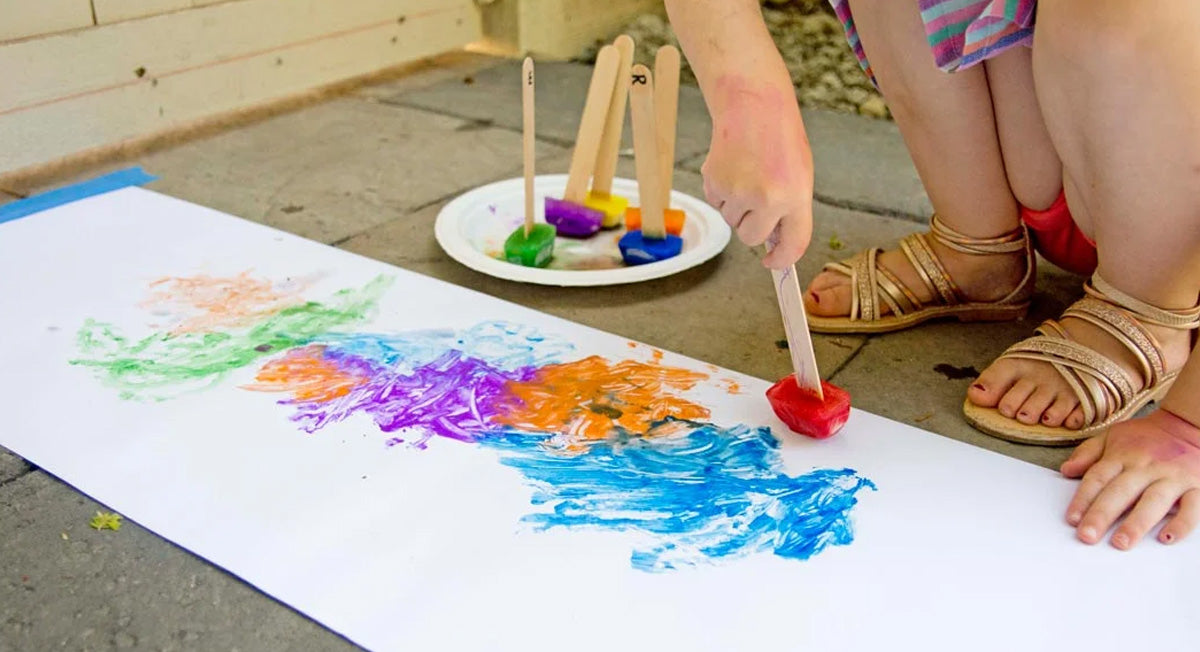
Ice painting is a creative and sensory activity that playfully combines art and science . To carry out this activity, simply make ice cubes in various shapes (such as cubes, spheres, or geometric shapes) and, before freezing them completely, add food coloring . Once the ice is ready, children can "paint" using the colored ice cubes as brushes. The melting water leaves interesting marks and creates a unique sensory experience.
Educational Objectives:
4. Scientific Experiments with Ice and Salt
A great way to integrate science and art in winter is to conduct science experiments involving ice and salt. Children can learn about the effects of salt on ice, such as how it melts the ice sheet more quickly, and perform experiments where they measure how long it takes for ice to melt with and without salt. To add an artistic touch, children can use dyes or paints to observe the colors that spread as the ice melts.
Educational Objectives:
5. Drawing with Ice and Food Coloring
Another form of scientific art involves using food coloring and ice to create dynamic and colorful designs. Children can use ice cubes to "draw" on sheets of paper, which will absorb the dyed water in various colors. As the ice melts, the colors mix in unpredictable ways, creating interesting and original visual effects.
Educational Objectives:
6. Make Snowflakes with Salt and Glue
For a more lasting activity, children can create artificial snowflakes using salt and glue. The activity begins with children drawing snowflake shapes on cardboard with glue. Then, they can sprinkle salt over the glue to create a snow-like texture. Once dry, the salt creates an interesting visual effect that can be painted or decorated with glitter or other materials.
Educational Objectives:
7. Experiments with Flash Freezing: Water and Temperature
This scientific experiment can be conducted to explore the impact of temperature on substances. Children can fill plastic bottles with water and observe what happens when the temperature around them changes. If possible, they can use a thermometer to measure the temperature and discuss how cold affects different materials, such as ice, water, and air.
Educational Objectives:
January, with its cold weather and typical winter characteristics, offers a wealth of opportunities to combine Science and Art in educational and creative activities. Whether experimenting with ice and salt, creating drawings with melted paint, or exploring crystal formation , these activities not only teach important scientific concepts but also encourage artistic expression and creativity. By integrating these experiences, children can learn in a playful, interactive, and meaningful way, creating winter memories that simultaneously stimulate their intellectual and artistic development .