
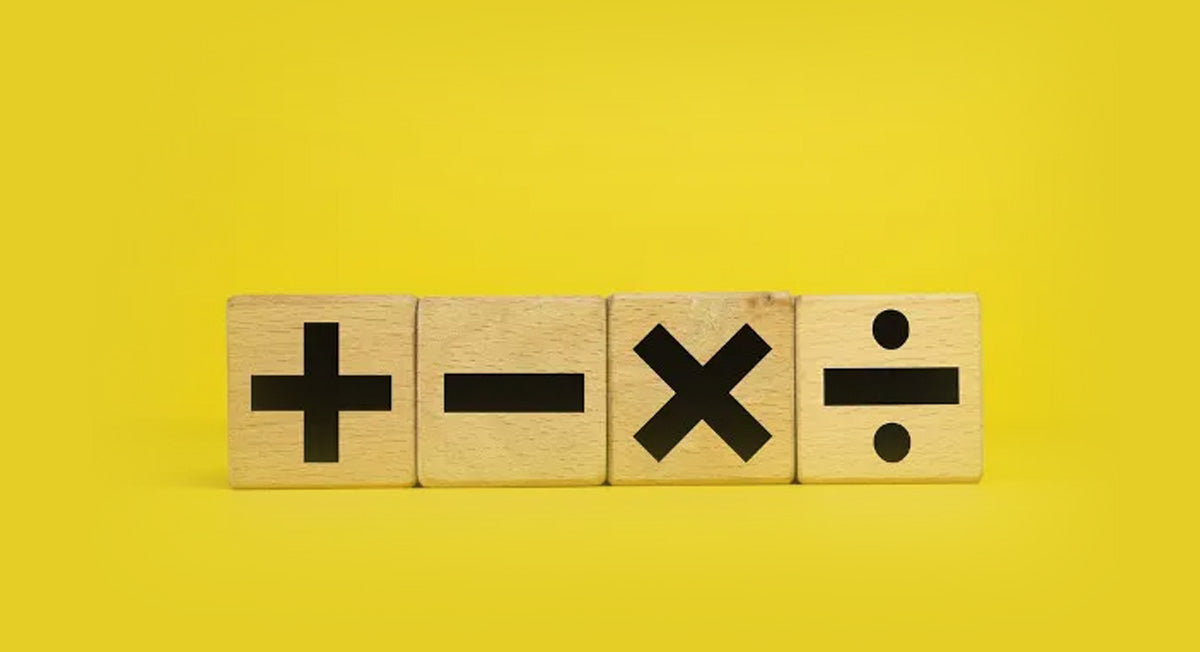
Mathematics is like a great magician, full of tricks and surprises! Among these tricks , the four basic operations – addition, subtraction, multiplication, and division – are the tools that help us unravel the world of numbers. Let's explore each of these operations in a playful way, transforming learning into a fun adventure!
1. Addition: The Magic of Joining
Addition is like bringing friends together at a party! " When there is a group of people and more people arrive, the total number of people increases. For example, if there are 3 apples and if..." Add 2 more, how many apples are there now?
Activity : Number Hunt
Objective : To practice addition .
Materials : Various objects (such as pencils, toys, or sheets of paper) and a sheet of paper for sharpening .
Preparation : Scatter various objects around the room.
How to play :
Interaction: Students can work in pairs to help each other with counting and adding .
2. Subtraction: The Magic of Separating
Subtraction is like a magician that makes things disappear! When there are 5 candies and you eat 2 , how many candies are left? Subtraction helps us understand what happens when we take something away.
Activity : The Thief's Game
Objective : To practice subtraction .
Materials : A basket containing objects (such as crumpled paper balls, pencils, or other small items).
Preparation : Place a defined number of items in the basket.
How to play:
Interaction: Several students can play the role of the thief and challenge their classmates to find out how many objects were left in the basket .
3. Multiplication: The Magic of Growing
Multiplication is like performing magic at a buffet ! If there are 4 plates of food and each plate has 3 cupcakes, how many cupcakes are there in total? Multiplying is adding the same number together several times.
Activity : The Dance of Multiplications
Objective : To practice multiplication .
Materials : Lively music and a free space to dance.
Preparation : Choose a song that the students like.
How to play:
Interaction: Students can create their own movements for different multiplication problems, making the activity more personal and fun.
4. Division: The Magic of Sharing
Dividing is like sharing a delicious pie among friends. If you have 8 slices of pie and 4 friends, how many slices can each person eat? Dividing teaches us to share equally.
Activity : Dividing the Pizza
Objective : To practice division.
Materials : A circle of paper (simulating a pizza) and pens or pencils.
Preparation : Draw a pizza on a circle of paper and divide it into slices.
How to Play:
Interaction : Students can share their pizzas and discuss different ways of dividing them.
Examples of more games to practice the four operations.
Objective : To practice the four basic arithmetic operations.
Materials : Cards with operations (addition, subtraction, multiplication, and division) and their respective answers.
How to Play:
Interaction : Students can work in pairs to discuss the their responses and memory strategies.
Objective: To practice the four basic arithmetic operations.
Materials : Bingo cards with the results of the operations and tokens to cover the corresponding number.
How to Play:
Interaction : Students can create their own bingo cards, choosing operations and results, promoting more active learning .
Objective: To practice the four basic arithmetic operations.
Material: Cards with operations and a marked route.
How to Play:
The four basic operations – addition, subtraction, multiplication , and division – are the magic keys that help us understand and explore the world of numbers. By making learning these operations fun and interactive , we are not only teaching mathematics , but also awakening curiosity and a love of learning in students. With games and playful activities, mathematics can be transformed into a magical experience that will accompany students throughout their education . educational path .