
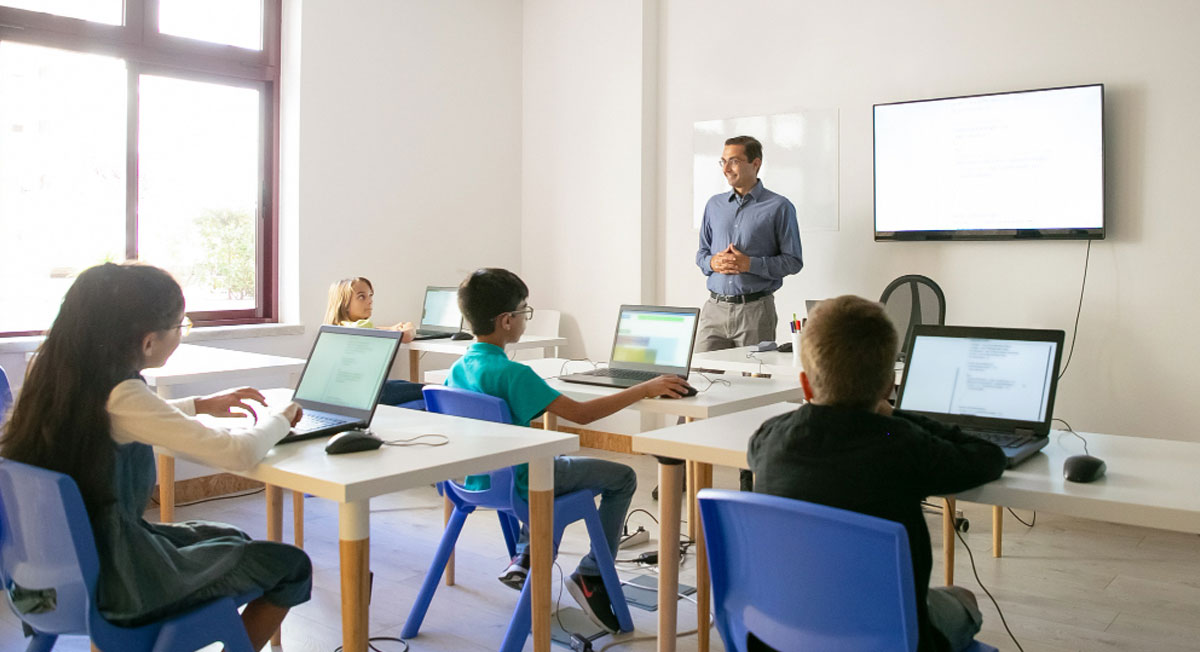
With the growing influence of technology in our society, it is essential that schools adapt and prioritize the teaching of digital skills and technological competencies. Students need to be prepared to deal with the challenges and seize the opportunities that arise in an increasingly digital world. This article will address the importance of teaching digital skills and understand how they can help students in their academic and professional lives.
Preparing for the future
In this era we live in, technology is rapidly changing the job market. New professions are emerging while others are disappearing. Therefore, it is crucial that students develop digital skills that allow them to adapt and thrive in a constantly changing environment. Teaching programming, data analysis, computational thinking, and other technology-related skills becomes fundamental to empowering students to face the professional challenges they will encounter.
Equity and digital inclusion
In today's world, access to technology is fundamental. However, significant inequalities still exist in terms of available technological resources. Thus, by teaching digital skills in schools, we are helping to reduce this gap and promote digital inclusion. Similarly, by providing all students with the opportunity to learn about technology and how to use it effectively, we are creating equitable conditions for students to have a successful future.
Stimulating critical and creative thinking.
Digital and technological skills are not limited to just using devices and applications. They also encompass the development of critical and creative thinking. For example, students are encouraged to solve problems logically and create innovative solutions through learning programming. Learning these skills helps students improve their analytical abilities and solve technological challenges.
Improved academic performance
Improved academic performance has been linked to the introduction of digital skills and technological competencies into the school curriculum. The use of technology in the classroom can make learning more fun and interactive, helping to spark students' interest and facilitating the understanding of more complex concepts. Furthermore, students who learn skills such as online research, data organization, and virtual collaboration can be more productive and improve their ability to learn independently.
Preparing for responsible digital citizenship
Learning digital and technological skills is not just about acquiring technical knowledge, but also about developing an understanding of how to use technology ethically and responsibly. We are helping students become responsible digital citizens by teaching them about online safety, data protection, privacy, and appropriate digital behavior. This is important in an era where the internet is so central to our lives and where security and privacy are constantly evolving.
Conclusion
In short, teaching digital skills and technological competencies is currently an urgent need in schools. These skills promote digital inclusion, stimulate creativity and critical thinking, improve academic performance, help students prepare for the future, and create responsible digital citizens. Schools must provide students with the necessary skills to seize opportunities and overcome obstacles in the digital world we live in. In this way, we are providing the next generation with the ability to create a bright future and excel in a constantly changing society.
Check out all our articles here .
Follow all our news here .