
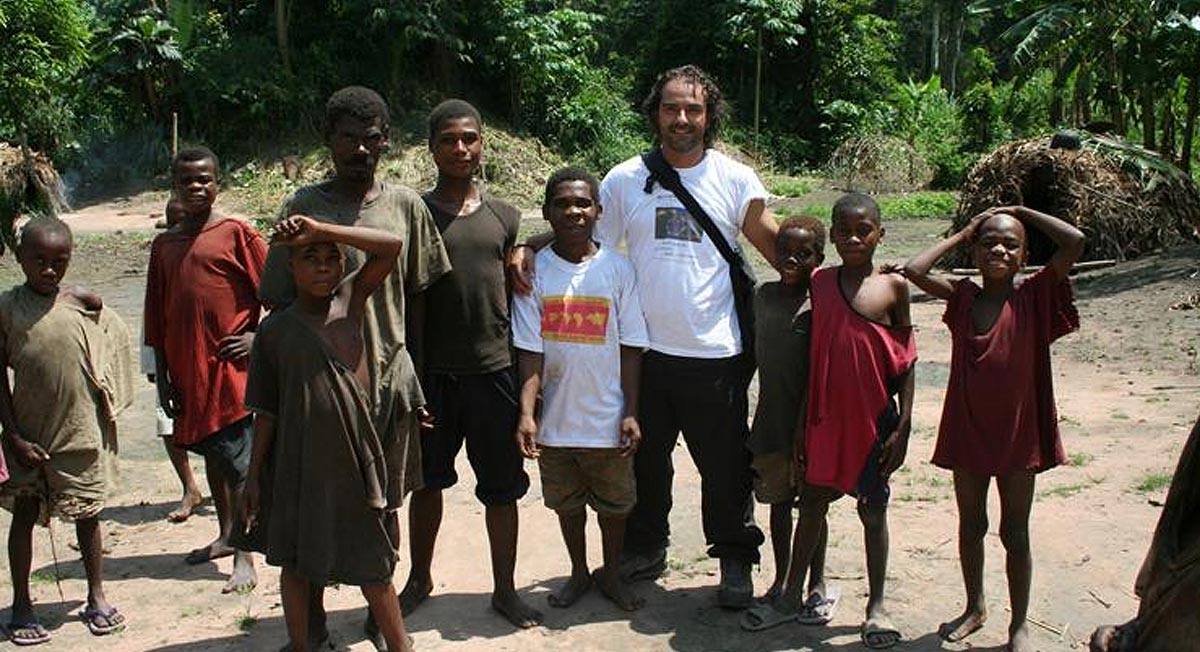
It is with great joy that the "World of Education" Blog presents an exclusive interview with Bernardino Silva, a prominent humanitarian. A graduate in Theology from the Pontifical Catholic University of São Paulo, Bernardino has extensive experience in projects focused on social and humanitarian good.
During the period from 2008 to 2011, Bernardino Silva played a crucial role as OIKOS Coordinator in the Northern Region, contributing significantly to the development and implementation of highly relevant charitable projects. His dedication to service was also evident throughout almost two decades as President of the Justice and Peace Commission of Braga, actively participating in fundamental social issues.
In addition to his commitment at the national level, Bernardino represented Portugal at the European Commission (COMECE) for the European Social Days, reinforcing his role as a tireless advocate for humanitarian causes. His practical experience in international volunteering is remarkable, collaborating with renowned organizations such as UNHCR, the International Red Cross, Doctors of the World, and Caritas International.

Among his notable achievements is the project "Um Olhar a Revelar" (A Look to Reveal), developed in the Complexo do Alemão favela in Rio de Janeiro, Brazil. Bernardino Silva is also the author of the book "Lugares e Instantes" (Places and Moments), which had a preface by the current Secretary-General of the United Nations, António Guterres.
Currently, Bernardino coordinates the Amar(es) Mission Project at the Amares Secondary School, an initiative that aims to provide international volunteering experiences, with a special focus on Mozambique.
We invite everyone to learn more about Bernardino Silva's inspiring journey and achievements in this exclusive interview, where he shares valuable insights into his tireless work towards a more just and humane world.

Understanding solidarity and volunteer work
1. What is your definition of solidarity and volunteer work?
My definition of solidarity is simple and aligns with the humanist thought and action of Mother Teresa of Calcutta: "You don't need to look far for solidarity. Knowing that there are people suffering is enough." That said, being a volunteer means being available to accept, in a committed and responsible way, the humanitarian challenges that are constantly occurring. When our availability is linked to charitable causes, we only have one path and one option: to go and meet those who are suffering.
2. In your opinion, what are the main reasons that lead young people to get involved in volunteer work?
I don't know if I would say the main reasons, but these are the ones that, in my view, make young people get involved in volunteering. One of them is curiosity about the novelty of something they've been told and shown, and perhaps the chance to try it out someday. Another reason has to do with the path many young people take throughout their studies, in social and parish groups or in youth associations, generating in them a more humanistic spirit that can be deepened according to the opportunities they find to carry out and get involved in volunteer work.
3. How do solidarity and volunteering relate to the personal development of young people?
Solidarity and volunteering are closely intertwined, therefore producing a common effect of raising young people's awareness of humanitarian causes. Knowing that they are attracted to what is different, and if we can relate this enthusiasm to a specific cause, I believe we are contributing to their integral development and personal growth. Obviously, this relationship must be based on values and principles that guide humanity and human rights. It is always important that this relational practice fits and makes sense within the choices of young people.
4. What impact does volunteer work have on the formation of values and understanding of social issues among young people?
Volunteer work, like any other, almost always has a significant impact on the development of young people. What matters is that young people understand the life path they wish to build for themselves, being aware that they are part of a common home that is our planet. When we understand this individual responsibility as a common cause, we can take important steps towards the great "utopian" project that another world is possible and necessary. By volunteering, young people achieve true happiness through discoveries and social, cultural, and even religious experiences. But what creates a real impact on the formation of values, and surpasses everything else, is the profound satisfaction of giving meaning to life.
The social development of young people
1. How does volunteer work contribute to the social development of the community?
The social development of a community is the responsibility of all citizens. I believe that what motivates us is the need to contribute to the exercise of a more enlightened and responsible citizenship, so necessary in the changing world we live in. Volunteer work, particularly by young people, contributes even more to this active citizenship, because they can cooperate through their digital knowledge and acquired skills to act in favor of a more just and sustainable community development.
2. In your opinion, what benefits can a society gain from the active participation of young people in solidarity projects?
In just a few years, we have changed our way of life and how we organize ourselves in society. The ongoing transformations are happening so rapidly that it becomes difficult, especially for young people, to grasp their complexities and consequences. Trying to combine volunteer work with other responsibilities is not an easy task, but it must be challenging for young people. If they can understand the ongoing change, grasp its mechanisms and determining factors, and anticipate at least some of its most incisive consequences on our present quality of life and the sustainability of future human progress, then the active participation of young people becomes an inescapable requirement for active and responsible citizenship through solidarity projects. Perhaps only in this way will young people be able to seriously benefit from the projects in which they are involved, realizing the growing importance of active, participatory, and responsible citizenship for our collective future.
3. What are the common challenges faced by young people when trying to combine volunteer work with their personal and academic responsibilities?
We live in a time dominated by the power of the idea of individual autonomy. We live in a time of constant transitions. I would say that these are the common challenges faced by young people, which are, in fact, the inevitable experiences of our own daily personal lives. The difficulty of adapting to new technical and professional demands, due to sectoral restructurings or the increasing use of information technology, is, in the case of young people, a significant factor of exclusion. This is where volunteer work becomes urgent and makes sense. Personal and academic responsibilities, contrary to what one might think, are everyday tasks, because teaching and caring well proclaim the fundamental value of human life. When volunteer work combines with these tasks, it contributes to the integral formation of young people, because to educate is to cultivate and to transmit. The importance of values in the formation of young people for volunteer work is, today more than ever, a huge challenge, but the only ones that converge towards the construction of a compassionate humanity.
The personal development of young people
1. How can volunteer work influence the personal growth and self-esteem of young people?
It is undeniable how much a volunteer experience can influence young people. The important thing is that young people understand that we live in an interdependent world and that we cannot distance ourselves from the problems of those around us. We are all vulnerable to the terror of wars, epidemics, famine, and the catastrophic effects of climate change. These harmful effects are felt by everyone, and for this reason, many of us are influenced to donate some of our time to humanitarian causes. It is here, in my view, that young people find their space and an opportunity for giving. This possibility of giving time can sometimes be more satisfying and valuable than one imagines and can even influence the behavior of young people. Volunteer work, experienced firsthand, creates bonds that are unique in life. It touches hearts and demonstrates how activism and service by young people can be an agent of change in the world. Therefore, volunteer work has the power to change not only our perspective but also the world, offering us a real possibility of becoming better people.
2. What skills, competencies, and experiences can young people acquire through volunteering?
Young people today show great sensitivity to social and environmental issues, justice, truth, solidarity, the dignity of human life, and their dealings with others. Obviously, to be part of a volunteer group, young people know they need to be available for training so they can accurately address all these issues. However, I believe that the demands society places on young people initially prepare them to accept experiences aimed at transforming structures that appear unjust to them. They constitute a force for transformation within society because they often have more skills and competencies to understand things and because they are more willing to take risks for their ideals. It is in this sense that I see youth volunteering as one of the greatest legacies to be considered in the coming decades, and we will depend on them in relation to the major themes of sustainable development.
The role of institutions and society
1. What measures can institutions, governmental or otherwise, take to promote and support youth involvement in volunteer work?
I wish to present a concrete example of the role of institutions, namely the educational institution (Amares Secondary School).
I believe that whenever an educational institution promotes voluntary activities, mediated and encouraged by the school, it offers its students the opportunity to actively participate in building a more cohesive and supportive society.
In this context, the “MISSÃO AMAR(ES)” project was born for high school students at the Amares Secondary School. Through a series of social and community-oriented actions, carried out selflessly by the students within various social projects, it seeks to encourage volunteering in the school context, but also to promote local action and global thinking. Volunteer Education thus occupies a unique place in the students' comprehensive preparation and helps them build an identity based on the common good.
Based on the experiences gained and the training acquired throughout secondary education, we wish to instill in the students participating in the Solidarity and Volunteering Club at Amares Secondary School a spirit of sharing and global experiences, particularly in the context of developing countries and, preferably, Portuguese-speaking countries. Therefore, we wanted the “MISSION AMAR(ES)” project to provide an opportunity for students to undertake an international volunteering experience.
In this ongoing journey, we aim to continue offering the volunteer experience we have been conducting in Mozambique over the past few years, where twenty-seven volunteers have already had the opportunity to participate.
2. How can society in general encourage young people to become more supportive and active in the community?
I don't need many words to answer, because only each young person, or each one of us, will know how we can "change the world" through our inner willingness to give ourselves to the most vulnerable.
3. Are there specific projects or programs that you consider good examples of youth involvement in volunteer work?
Almost all Non-Governmental Development Organizations (NGDOs) have programs and projects that offer an advantage for volunteer work experience. It then largely depends on each young person's personal and professional skills and, above all, their availability to make the necessary commitments to achieve the proposed objectives. I believe that starting volunteering in school groups, parishes, or local associations is always the best way to begin a close-knit experience.
The future of volunteer work and solidarity among young people.
1. How do you envision the future of volunteering among young people? What challenges and opportunities lie ahead?
Volunteering is, today, a movement that mobilizes a large number of young people and adults worldwide, serving as an instrument for civil society participation in the most diverse fields of activity. This practice is not limited to the social field, but extends to culture, education, justice, the environment, sports, and other dimensions of our daily lives, responding to the issues that continually emerge from the social, economic, or political fabric.
Conclusion:
What message would you like to convey to young people who are considering volunteer work as part of their personal development?
My message and advice is simple: be men and women who fight for the guiding meaning of life, through love. When we are guided by love for others, we understand that we are co-responsible for everything that happens around us, therefore we must adjust responsible behaviors to believe that another world is possible. If we are all cooperative, we will be happier and our lives will be better. And those who live well, love better.
I conclude with a thought from the Iranian Ali Shariati, and based on this statement, I believe that each of us has the opportunity to change the world: "If you cannot eliminate injustice, at least tell everyone."
The blog “Mundo da Educação” expresses its deep gratitude to Bernardino Silva for his generosity in dedicating his time to this interview and for sharing his valuable experiences and knowledge in such an enriching way. His availability and contribution made this conversation meaningful and inspiring. We sincerely thank him for sharing valuable insights that will surely illuminate and enrich the understanding of our readers.
Check out all our articles here .
Follow all our news here .