
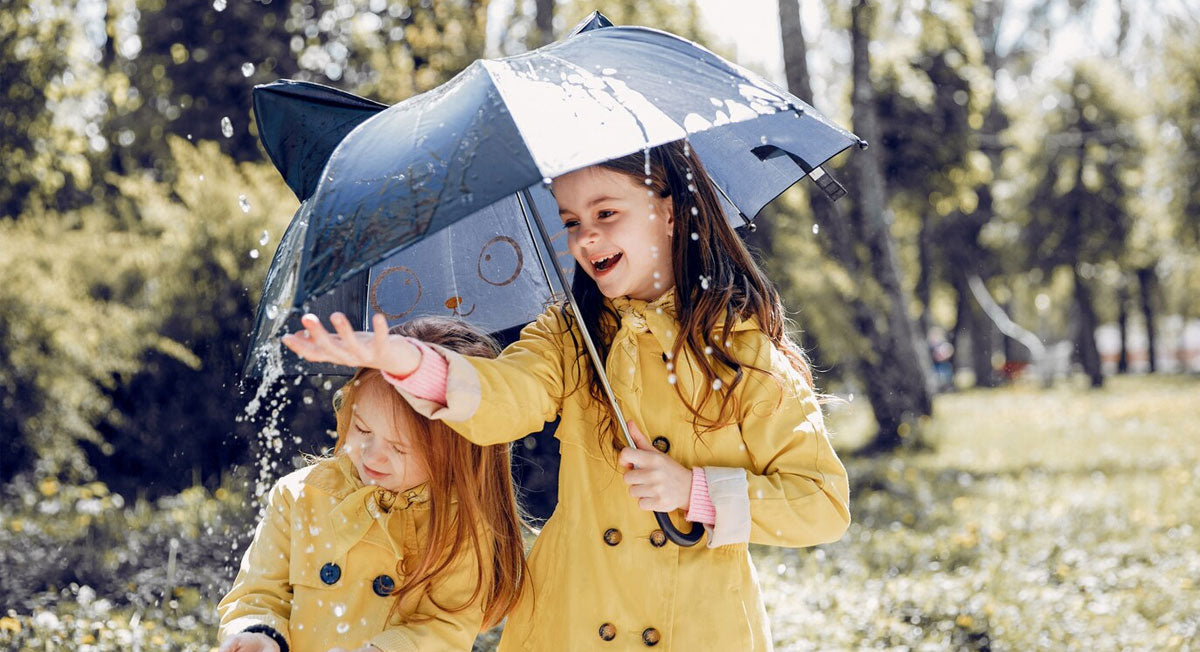
Meteorology is a fascinating science that studies atmospheric phenomena and climate. For curious children, exploring the world of meteorology can be an exciting journey full of discoveries and fun experiments. On this World Meteorological Day, we'll delve into some meteorological curiosities and simple experiments that can be done at home and at school for students to learn more about the weather.
Meteorological Curiosities:
Double rainbow
Did you know that sometimes it's possible to see two rainbows at the same time? The second rainbow is fainter and located above the first. This phenomenon is called a double or secondary rainbow.
Lightning and thunder
Have you ever wondered why we see lightning before we hear thunder during a storm? This is because light travels faster than sound. Lightning is an electrical discharge that produces light instantly, while thunder is the sound resulting from the rapid expansion of air heated by the electrical discharge.
Different clouds, different weather.
Clouds can tell us a lot about the weather to come. For example, cumulonimbus clouds are associated with thunderstorms and heavy rain, while thin, stringy cirrus clouds generally indicate that the weather will be sunnier.
El Niño phenomenon
El Niño is a climatic phenomenon that occurs periodically in the Pacific Ocean, causing significant changes in the global climate. It can affect rainfall, temperatures, and wind patterns in various parts of the world.
Meteorological Experiments:
Mini tornado in a bottle
Fill a plastic bottle halfway with water and add a few drops of food coloring. Then, add some dish soap and shake the bottle. Quickly rotate the bottle in a circular motion and watch a mini tornado form inside.
Measuring wind speed
Make a simple pinwheel using paper, popsicle sticks, and a pin. Take it outside on a windy day and observe how the blades spin. Time how long it takes for the pinwheel to complete one rotation and use that information to estimate the wind speed.
Rain simulation
Fill a bowl with warm water and cover it with plastic wrap. Place some ice cubes on top of the plastic wrap and watch as the water vapor condenses on the underside of the wrap, forming small "rain" droplets that fall into the bowl.
Building a homemade barometer
Make a simple barometer using a glass and a rubber balloon. Stretch the balloon over the mouth of the glass and secure it with a rubber band. Insert a toothpick or skewer into the balloon so that it is in the center. When atmospheric pressure increases, the balloon will contract and the water level on the toothpick will rise. When atmospheric pressure decreases, the balloon will expand and the water level on the toothpick will fall.
Conclusion:
Exploring the world of meteorology can be an educational and fun experience for children of all ages. By learning about meteorological curiosities and conducting simple experiments at home and at school, children can develop a deeper understanding of the weather and the world around them. May these activities inspire a new generation of scientists and weather enthusiasts to continue exploring and discovering the secrets of meteorology.
Check out all our articles here .
Follow all our news here .